

 Current position >About Us
Turbine Type Flow Meters and Turbine Flow Transmitters with Precision Pulse Outputs for Fluid Fuel
Quick Answer: Silver Automation Instruments supplies turbine type flow meters and turbine flow transmitters with pulse output for diesel, fuel oil, jet fuel and clean liquid fuels. Accuracy of 0.5 percent of reading is standard. Pulse output connects directly to PLC, batch controller and remote totalizer systems without extra signal conversion.
What a Turbine Flow Meter Does in Fuel Service
A turbine flow meter uses a rotor with precision blades. Fluid moves through the meter body and spins the rotor. Rotor speed is linear with flow velocity. A pickup sensor detects each blade pass. The result is a frequency output. The frequency is proportional to flow rate.
For fuel measurement this matters. You need totalized volume for inventory. You need flow rate for process control. Pulse output gives both. A pulse signal survives long cable runs better than an analog signal. Many terminal and batching systems in Indonesia and Malaysia already use pulse input modules.
Pulse Output and Turbine Flow Transmitter Options
Standard pulse output. The turbine meter sends a square wave frequency. The signal amplitude depends on the pickup type. Most models use 24 V DC power. Signal frequency can range from 10 Hz to 3000 Hz depending on flow and blade count.
4-20 mA HART transmitter. Some sites need analog input to an existing DCS or SCADA. Silver Instruments pairs the turbine meter with a turbine flow transmitter. The transmitter converts frequency to a 4-20 mA HART signal. Totalizer and rate display can be local or remote.
We have supplied both versions to a diesel storage terminal in Vietnam. The terminal wanted pulse output for a batch controller. They also needed 4-20 mA for the control room. The solution was one turbine meter body with two output paths.
Common Fuels and Compatible Materials
Turbine flow meters work well with clean low viscosity fuels. Diesel, kerosene, jet fuel, gasoline, light fuel oil and biodiesel blends are typical. Viscosity range is usually 0.5 to 100 cP. Higher viscosity heavy fuel oil needs a different meter type or a larger turbine meter with special bearings.
Wetted materials in our standard fuel turbine flow meter include 316 stainless steel housing and tungsten carbide bearings. Rotor material can be stainless steel or CD4MCu. Seals are PTFE or FKM. For aggressive fuels or chemical solvents we use PFA lined turbine meters or special alloy rotors.
Do not use a turbine flow meter for dirty fluids with particles. A strainer upstream is standard. We recommend a 100 mesh strainer for diesel and gasoline lines. Without a strainer the rotor can jam. We have seen this on customer sites in the Philippines where fuel truck loading lines had rust particles.
Size Range and Performance Data
Silver Instruments turbine flow meters cover DN4 to DN300. Flow ranges start from 0.04 L/min for small fuel dosing skids. Large fuel transfer lines can reach 600 m3/h. Pressure ratings go up to 250 bar for small sizes and PN16 to PN40 for flanged larger sizes.
Typical accuracy is 0.5 percent of reading for liquid flow above the transition flow rate. Repeatability is often 0.1 percent. Turndown ratio can reach 10 to 1 or 15 to 1 for low viscosity fuels. Process temperature is -20 to 120 degrees Celsius as standard. High temperature versions reach 150 degrees Celsius.
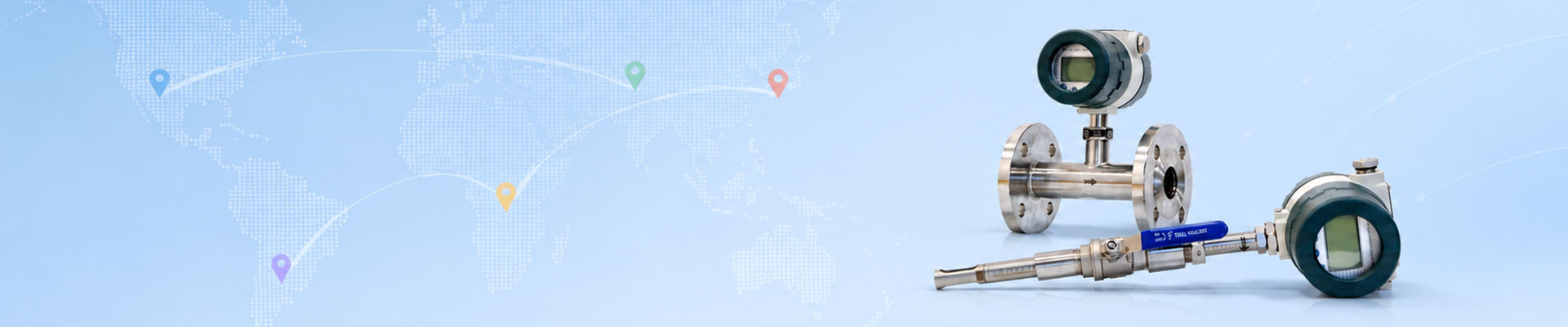
We recommend the TUF series turbine flow meter with pulse pickup for most fuel applications. For analog and HART output choose the STF series turbine flow transmitter. Both series can be supplied with calibration certificates. Each meter is calibrated on a volumetric bench at the factory. Calibration points follow 5 points across the flow range.
ATEX and Hazardous Area Versions
Fuel measurement