

 Current position > Product detail
『Hydraulic Pump Flow Meter: Diagnostic Audits to Verify Volumetric Efficiency and Pressure Curve Reductions』Related information(flow rotameter|digital flow meter|balo meter|hydraulic flow meter|volumetric meter|positive displacement meter|pitot tube flow meter|displacement meter|cfm meter|variable area flow meter|inline flow meter|differential pressure flow meter|calibrated flow meter|velocity meter|paddle wheel flow meter|oval gear flow meter|anemometer hvac|multiphase flow meter|doppler flow meter|thorpe tube flowmeter|heat flow meter)
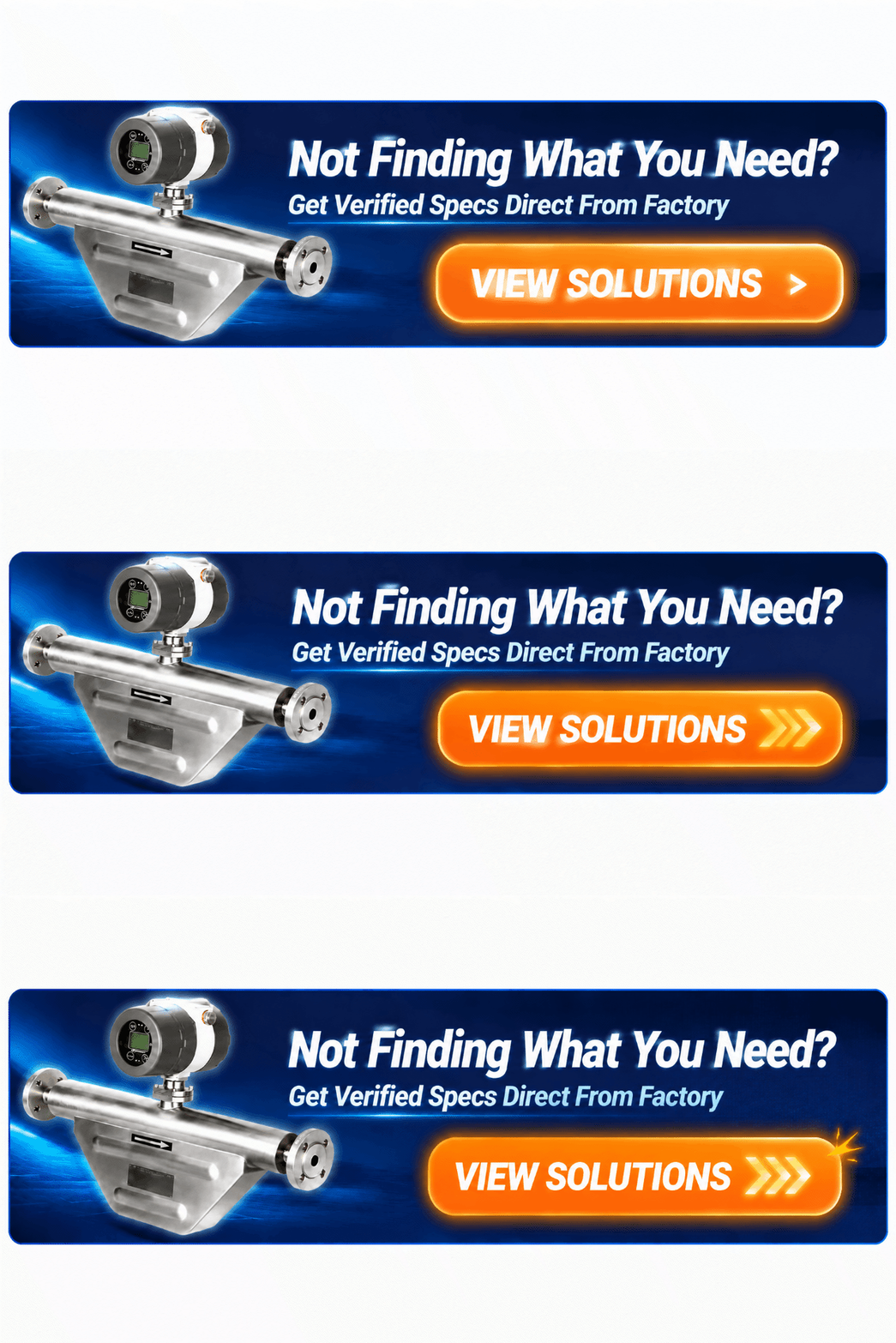
Hydraulic Pump Flow Meter: Diagnostic Audits to Verify Volumetric Efficiency and Pressure Curve Reductions
Quick Answer: A hydraulic pump flow meter measures actual flow at set pressure and temperature. Compare that flow to the theoretical pump displacement to calculate volumetric efficiency. Track the flow drop from 30 bar to rated pressure to verify pressure curve reductions before a pump fails.
In practice, a hydraulic pump can look healthy at low pressure and still be close to failure under load. The issue is internal leakage. As wear develops in a piston pump or vane pump, more oil slips from the high pressure side back to the low pressure side. The pump still moves oil, but the net flow falls. A flow meter installed on the outlet line catches this drop in minutes.
Many workshops in Southeast Asia and Latin America skip this audit because they trust the pressure gauge. That is a mistake. Pressure only tells you resistance. It does not tell you volume. A hydraulic pump with a worn piston can still reach 200 bar, but the flow may be 30 percent below the catalog value. That means slower cylinder travel, longer cycle times, and more heat.
Why Volumetric Efficiency Is the First Audit Number
Volumetric efficiency is the ratio of actual flow to theoretical flow. Theoretical flow is displacement per revolution multiplied by shaft speed. For example, a gear pump with 30 cc per rev running at 1500 rpm has a theoretical flow of 45 L/min. If the flow meter shows 40 L/min at 100 bar, volumetric efficiency is 88.9 percent. Most repairs are justified when volumetric efficiency falls below 85 percent. Some OEMs allow 80 percent in general hydraulic systems, but many piston pumps need 90 percent or better at rated pressure.
A customer in Vietnam tested a variable displacement piston pump last year. At 50 bar the flow was 58 L/min. At 180 bar the flow dropped to 46 L/min. The theoretical flow was 60 L/min. That gave 76.7 percent volumetric efficiency at the high pressure point. The pump still worked on the excavator, but the dig cycle was slower. The audit showed the pressure curve reduction.
Pressure Curve Reduction Checks
A pressure curve test is simple. Run the pump at fixed speed with a flow meter and a relief valve. Record flow at 30 bar, 80 bar, 130 bar, 180 bar, and 220 bar. Keep oil temperature stable. Hydraulic oil viscosity changes with temperature, so a 10 degree Celsius shift changes flow readings. Keep the tank between 40 and 50 degrees Celsius during the test.
Plot flow against pressure. A good pump shows a slight flow drop from low to high pressure. A worn pump shows a steep drop. The difference between the 30 bar flow and the rated pressure flow is your pressure curve reduction. For many mobile hydraulic pumps, a reduction of more than 5 percent from the baseline means the pump needs a rebuild.
Flow Meter Selection for Hydraulic Pump Audits
Not every flow meter works well on a hydraulic test bench. Turbine flow meters can be used, but they are sensitive to oil viscosity changes. Hydraulic oil at ISO VG 32 has a viscosity around 32 cSt at 40 degrees Celsius. At startup, viscosity can be much higher. Oval gear flow meters and gear flow meters are better for this duty because they are positive displacement devices. They measure volume directly and are less dependent on viscosity. Silver Automation Instruments supplies oval gear flow meters from DN4 to DN80. They cover flow ranges from 0.04 L/min up to 340 L/min. A DN15 ova
For high accuracy audits, a Coriolis mass flow meter from Silver Automation Instruments works for flows from 0.1 kg/h to 150 t/h. It gives mass flow and density at the same time. That density signal helps detect air entrainment and oil type changes. The cost is higher, so many repair shops use an oval gear flow meter first and upgrade to Coriolis when they test high value pumps or need traceable data.
Installation Notes for a Clean Audit
Mount the flow meter downstream of the pump but upstream of the pressure relief valve if possible. The meter must see the same oil that the pump delivers. Use straight pipe runs only if the flow meter manual asks for them. Many positive displacement flow meters do not need long straight runs. Install a particle filter or strainer upstream because metal particles from a failing pump can damage the measuring element. Use a pressure sensor and a PT100 temperature sensor near the meter. The flow meter signal can be pulse, 4 to 20 mA, or RS485 Modbus. Silver Automation Instruments configures pulse output for total flow and a 4 to 20 mA output for live flow rate on most oval gear flow meters.
Because air bubbles cause false high volume readings, avoid testing with cloudy oil. Let the system circulate for 20 minutes before you start logging. One customer in Malaysia had a flow meter reading that jumped between 32 and 41 L/min. The problem was air trapped in the return line. After bleeding the test bench and filling the pump case, the reading became stable.
What Data to Record
Record flow rate in L/min at each pressure step, oil temperature in degrees Celsius, pump inlet vacuum, and drive motor speed in rpm. A paperless recorder from Silver Automation Instruments can log flow, pressure, and temperature together. That setup makes the pressure curve easier to compare across tests. Technicians can save the data as a CSV file and email it to a plant engineer.
FAQ
What flow meter is best for hydraulic pump testing?
An oval gear flow meter is often the best first choice. It handles high viscosity oil, reads direct volume, and gives pulse output for total flow.
Can a turbine flow meter verify pump volumetric efficiency?
Yes, but it requires stable viscosity and clean oil. Many hydraulic oils change viscosity with temperature, so positive displacement meters give more repeatable data.
What volumetric efficiency indicates a pump rebuild?
Below 85 percent at rated pressure is a common trigger for mobile hydraulic pumps. Some industrial pumps allow 80 percent. Always compare against the OEM baseline for the same speed and oil temperature.
Why does flow drop as pressure rises?
Higher pressure forces oil through internal clearances in the pump. Wear, scoring, or damaged piston shoes increase this leakage.
Does Silver Automation Instruments supply complete flow audit kits?
Yes. Silver Instruments supplies oval gear flow meters, pressure transmitters, PT100 sensors, and paperless recorders. Contact Tel +86-25-68650347 or WhatsApp +86-25-52155837 for a kit.
Send us your flow range in L/min, oil viscosity in cSt, pipe size in DN, and maximum pressure in bar. We will recommend a flow meter and signal output for your hydraulic pump audit bench. Contact Silver Automation Instruments at Tel +86-25-68650347, WhatsApp +86-25-52155837, or WeChat +86 15365082610.