

 Current position > Product detail
『0.5 L/Min Flow Meter Air Flow Sampling Optimization』Related information(flow rotameter|digital flow meter|balo meter|hydraulic flow meter|volumetric meter|positive displacement meter|pitot tube flow meter|displacement meter|cfm meter|variable area flow meter|inline flow meter|differential pressure flow meter|calibrated flow meter|velocity meter|paddle wheel flow meter|oval gear flow meter|anemometer hvac|multiphase flow meter|doppler flow meter|thorpe tube flowmeter|heat flow meter)
0.5 L/Min Flow Meter Air Flow Sampling Optimization
Quick Answer: Air sampling applications that require a steady 0.5 litre per minute flow demand a meter that reads mass flow directly. Thermal mass flow meters are the best fit because they ignore pressure swings and temperature shifts. Silver Instruments supplies the ST-100 series with a 0 to 1 L/min range and 4 to 20 mA HART output for real time control.
Why a 0.5 L/min Flow Rate Causes Headaches in Air Sampling
At 0.5 L/min you are moving a tiny amount of gas. A small drift in sensor temperature or a 50 mBar backpressure change can throw your reading off by 10 percent or more. Many technicians have seen a rotameter that reads fine in the morning but drifts after lunch when the workshop heats up. That is why plant managers in the Middle East and Southeast Asia keep asking us for a stable low flow meter that does not need daily adjustment.
Thermal Mass Flow Meters vs. Rotameters for Low Flow Air
Rotameters are common. They are cheap. But a glass tube rotameter for 0.5 L/min air is purely volumetric. You must manually correct for temperature and pressure if you need mass flow. Most engineers skip this part and end up with a 5 to 8 percent error in a stack sampling report. Thermal mass flow meters from Silver Instruments measure the cooling effect of the gas across two PT100 sensors. The electronics convert that directly to mass flow in kg/h or standard litres per minute. No separate pressure transmitter. No separate temperature probe. No look up table.
A Real Case from a Paint Manufacturer in Southeast Asia
Last year a paint factory in Vietnam contacted us. They run a continuous emissions monitoring system that pulls 0.5 L/min from a stack. The analyser was reporting VOC concentrations that did not match their production logs. We checked their site photos. The sampling line had a small rotameter installed near the probe. The ambient temperature around the probe was cycling between 30 and 55 degrees Celsius. That 25 degree swing changed the air density and threw off the volumetric reading. We replaced the rotameter with a Silver Automation Instruments ST-100 thermal mass flow meter. The unit was set to 0 to 1 L/min, with a 4 to 20 mA output wired to their PLC. Within one day the VOC readings matched the expected values and the plant QHSE team signed off the report.
Key Specs to Check Before You Order a 0.5 L/min Air Flow Meter
Here is the thing. When you buy a flow meter for air sampling you need to get four parameters right. First, the flow range: choose a meter with a full scale of 1 L/min or 500 to 600 sccm. That puts 0.5 L/min at 50 percent of the measurement span, where accuracy is best. Second, the output: 4 to 20 mA HART works with almost any PLC or SCADA. Third, the wetted material: for general air SS 316L is fine; for stack gas with SO2, ask for
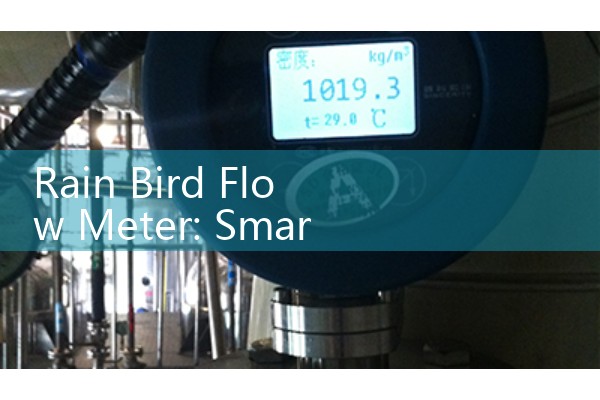
Silver Automation Instruments ST-100 Series Designed for 0.5 L/min Air Flow
We built the ST-100 series specifically for low flow gas measurement. The standard range is 0 to 1 L/min for air, with a measurement accuracy of plus minus 1 percent of reading above 0.2 L/min. Repeatability is better than 0.2 percent of full scale. The meter body is compact, with a 1/8 inch NPT process connection that fits most sampling lines. You can configure the display to show flow in SLPM, kg/h, or m3/h. The housing meets IP66 for outdoor installation. ATEX Zone 2 certification is available as an option. Because the ST-100 uses the constant temperature anemometer principle, it reacts in under 1 second to flow changes. No bypass line is needed.
Frequently Asked Questions
Can I apply a differential pressure type flow meter for 0.5 L/min air? In theory yes with a laminar flow element. In practice the differential pressure at 0.5 L/min is extremely small. You need a very sensitive DP transmitter and the installation is tricky. A thermal mass meter is easier to install and maintain.
Do I need a mass flow controller instead of a flow meter? If you have to keep 0.5 L/min constant regardless of filter loading, a mass flow controller is better. Silver Automation Instruments also supplies a low flow controller version, the SC-100. But if you only monitor the flow for a sampling pump check, a meter is enough.
How do you calibrate a 0.5 L/min air flow meter? We calibrate each ST-100 on a piston prover or a laminar flow bench with dry air at 20 degrees Celsius and 1.01325 bar absolute. A calibration certificate with nine test points is included. The customer can do a field check with a high precision rotameter if needed.
What is the typical lead time for a low flow thermal mass meter from Silver Instruments? Stock models with a 0 to 1 L/min range for air ship in 2 to 3 weeks. Models with exotic wetted materials or ATEX certification take 5 to 6 weeks. We ship from Shanghai to Southeast Asia, Oceania, and the Middle East daily.
Can I integrate the meter signal into a PLC without a HART modem? The ST-100 provides a standard 4 to 20 mA analog output that any PLC AI card can read directly. HART is used only for configuration via a handheld communicator. You do not need a HART modem for daily operation.
Send us your pressure in bar, temperature in Celsius, pipe size in DN or inch, and your exact flow range. A Silver Instruments engineer will reply within one business day with a specific model recommendation and a formal quotation for a 0.5 L/min air flow meter. Let us get your sampling system back to stable readings.