

 Current position > Product detail
『Rachio Flow Meter Troubleshooting: Diagnosing Wireless Irrigation Issues』Related information(flow rotameter|digital flow meter|balo meter|hydraulic flow meter|volumetric meter|positive displacement meter|pitot tube flow meter|displacement meter|cfm meter|variable area flow meter|inline flow meter|differential pressure flow meter|calibrated flow meter|velocity meter|paddle wheel flow meter|oval gear flow meter|anemometer hvac|multiphase flow meter|doppler flow meter|thorpe tube flowmeter|heat flow meter)

Rachio Flow Meter Troubleshooting: Diagnosing Wireless Irrigation Issues
Quick Answer: Most wireless flow meter failures in Rachio irrigation systems come from lost radio connection, low battery on the pulse meter, or incorrect K-factor and offset values. First check the sensor power supply and confirm the flow reading on the local display. For high-reliability irrigation mains, consider an industrial electromagnetic flow meter with wired 4-20 mA or RS485 output instead of consumer-grade pulse devices.
Symptom 1: No Flow Reading on the Rachio App
When the Rachio controller shows zero flow but the pump is running, the wireless flow sensor may have lost pairing. A typical residential setup uses a Hall-effect pulse meter and a battery-powered radio transmitter. The pulse output from the DN15 or DN20 plastic body water meter connects to a small radio board. One common fault is a drained 3.6V lithium battery. A sugarcane farm in Bundaberg, Queensland had this exact issue. The pulse meter stopped sending after 14 months because the battery voltage dropped below 2.7V. They replaced the battery and the signal came back.
For larger irrigation pipelines of DN80 or DN100, we recommend Silver Instruments battery-operated electromagnetic flow meters with integrated NB-IoT or LoRaWAN communication. These units have a built-in lithium pack rated for 5 years and report battery life as a Modbus register.
Symptom 2: Erratic Flow Rate Spikes
Flow spikes often happen when air pockets pass through the sensor. In drip irrigation and sprinkler zones, air can enter after a repair or during pump start. A plastic turbine flow meter will over-register because the rotor spins freely in air. In practice, the Rachio app might show 200 L/min for a few seconds on a zone that normally draws 80 L/min.
Industrial users solve this by using electromagnetic flow meters that measure actual liquid conductivity. A magnetic flow meter will read zero flow when the pipe is empty, because the electrode circuit opens. We supply Silver Instruments models with empty pipe detection and a configurable low-flow cutoff. For a mango orchard in Thailand, we paired a DN50 electromagnetic flow meter with a Rachio Pro controller via a 4-20 mA analog input module. The erratic spikes stopped immediately.
Symptom 3: Flow Totalizer Does Not Match the Water Meter
Here is the thing, totalizer mismatches almost always come from wrong pulse scaling. If the Rachio is configured for 1 pulse per gallon but the meter sends 16 pulses per gallon, the totalizer will be wrong by a factor of 16. Many installers skip the meter manual and use default settings. A recent case involved a flower greenhouse in Ethiopia using a Rachio 3 with a third-party impeller meter. The totalizer showed 450 cubic meters per day, but the master mechanical water meter read 28 cubic meters. The error was a K-factor mismatch: the meter output was 0.46 L/pulse, but the controller assumed 1 L/pulse.
For mission-critical water reporting, a flow meter with a direct frequency output or RS485 Modbus eliminates pulse scaling guesswork. Our Silver Instruments electromagnetic flow meters can output volumetric pulses scaled in engineering units, alongside digital totalizer data. You can connect the RS485 link to a gateway and push all values to a central SCADA.
Wireless vs Wired: When to Move to Industrial-Grade Measurement
Consumer-grade wireless flow sensors work for small landscapes. A 25 mm PVC pipe with clean water and stable pressure is a forgiving application. But as pipe size grows to DN65 and above, noise and vibration affect battery-opera
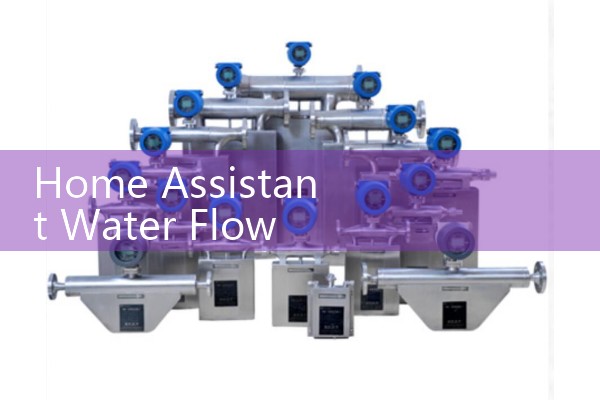
Silver Automation Instruments supplies Coriolis mass flow meters and magnetic flow meters for water, fertilizer, and diluted chemical injection. The output can be wired directly to an irrigation PLC or sent via the Rachio analog sensor input. This gives you a trend graph based on actual mass flow, not just a pulse count.
Quick Diagnostic Checklist
Before calling a technician, run these checks:
Verify the wireless sensor LED blink pattern, usually one flash every 10 seconds when normal.
Measure battery voltage at the transmitter with a multimeter. Below 2.8V under load means replace.
Inspect the O-ring and impeller for debris. A single grain of sand can jam a small plastic turbine.
Confirm the Rachio flow sensor type is set to pulse output and the correct K-factor is entered.
If using an analog 4-20 mA flow transmitter, measure loop current with a Fluke 789. A 0 mA signal usually means a broken wire or no power.
Why Silver Instruments for Industrial Irrigation Flow
We manufacture electromagnetic flow meters from DN6 to DN2000 with PTFE and hard rubber liners for raw water, liquid fertilizer, and seawater. Our meters carry 4-20 mA HART, Modbus RTU, and pulse outputs. Flange ratings cover PN10 to PN40 with options for ATEX Zone 1. For wireless applications, we offer integrated 4G/NB-IoT data loggers that feed flow data directly to the cloud.
You can reach our engineers for a specific application proposal. Send us your pipe size (DN), media type, pressure (bar), temperature (°C), and required output signal. Typical lead time for a DN100 magnetic flow meter is 2 to 3 weeks ex-works Nanjing.
Contact details: Email: [email protected], Tel: +86-135-1213-1526, WhatsApp: 86-135-12131526, WeChat: +86 13512131526.
Frequently Asked Questions
Q: Can I connect a Silver Instruments flow meter directly to a Rachio controller?
A: Yes. If your Rachio has an analog 0-10V or 4-20mA sensor input, use a Silver flow meter with the matching output. For pulse inputs, configure the K factor in the Rachio app to match the pulse per liter value on the meter label.
Q: What is the minimum conductivity for a magnetic flow meter in irrigation?
A: Our standard electromagnetic flow meters need a liquid conductivity above 5 µS/cm. Most irrigation water from rivers, dams, or boreholes easily meets this. Pure rainwater below 20 µS/cm may cause unstable readings. In that case, use an ultrasonic flow meter.
Q: How do I protect the flow meter from lightning in a remote pumping station?
A: Install a surge arrester on the signal cable and ground the meter body with a 16 mm² copper cable to an earth rod. For RS485 lines, use isolated repeaters. We ship all electromagnetic sensors with built-in grounding rings.
Q: Can a flow meter measure liquid fertilizer with phosphoric acid?
A: Yes. Select a magnetic flow meter with a PTFE liner and Hastelloy C electrodes. This combination handles pH down to 1 and temperatures up to 80°C. We supply fertilizer-ready meters for drip irrigation injection systems.
Q: Do you have a flow meter that works without external power in remote fields?
A: Our battery-powered magnetic flow meters run on an internal lithium pack that lasts 3 to 5 years. They sample flow every 1 second and store daily totals. Data download is via Bluetooth or NB-IoT. A dairy farm in New Zealand uses this setup for effluent irrigation monitoring.