

 Current position > News detail
『Multivariable Vortex Flow Meter: Integrated Pressure and Temperature Mass Probes』Related information(flow rotameter|digital flow meter|balo meter|hydraulic flow meter|volumetric meter|positive displacement meter|pitot tube flow meter|displacement meter|cfm meter|variable area flow meter|inline flow meter|differential pressure flow meter|calibrated flow meter|velocity meter|paddle wheel flow meter|oval gear flow meter|anemometer hvac|multiphase flow meter|doppler flow meter|thorpe tube flowmeter|heat flow meter)
Multivariable Vortex Flow Meter: Integrated Pressure and Temperature Mass Probes
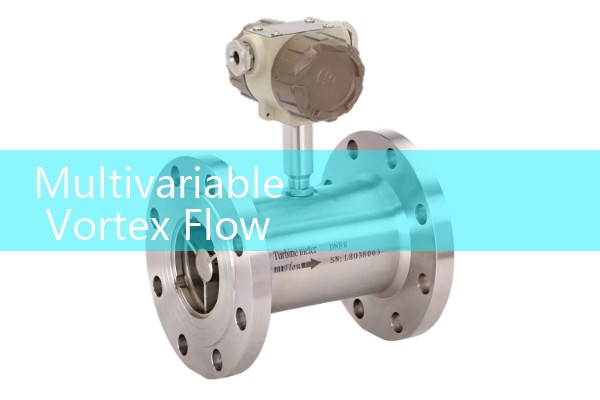
Quick Answer: A multivariable vortex flow meter with integrated pressure and temperature mass probes gives direct mass flow for steam, gas, and liquid lines. You get pressure compensated flow, temperature compensated flow, and density data from one inline device. Silver Automation Instruments supplies these meters in DN15 to DN300 sizes with 4-20 mA HART, Modbus RTU, and optional ATEX Zone 1 certification.
A standard vortex flow meter reads volumetric flow. Engineers often need mass flow. For steam, gas, and liquids with changing temperature or pressure, volumetric readings shift without compensation. The multivariable version embeds a temperature sensor and a pressure sensor into the same vortex meter body. The electronics then calculate mass flow in kg/h or lb/h. This removes the need for a separate flow computer in many small skids. It also cuts wiring and pipeline taps.
The meter uses a PT100 platinum RTD for temperature. The pressure probe can be a piezoelectric or strain gauge sensor. Typical pressure ranges cover 0 to 10 bar, 0 to 16 bar, 0 to 25 bar, 0 to 40 bar, or higher on request. Temperature range often covers -40 °C to 250 °C for standard versions. Some high temperature versions go up to 350 °C. The flow sensor is the standard bluff body and piezoelectric element used in vortex shedding measurement. The transmitter calculates mass flow based on the current density of the fluid. For saturated steam, it uses temperature or pressure. For superheated steam, it uses both. For gases, it uses temperature and pressure plus a standard ideal gas correction. For liquids, it uses temperature only for density correction.
Where This Meter Fits in Real Plants
These meters are common in steam boiler houses, natural gas distribution, compressed air systems, and chemical dosing loops. We have supplied them to a palm oil refinery in Malaysia, a dairy plant in Australia, and a water desalination line in Chile. In each case the customer wanted one instrument instead of three separate transmitters.
Last year a customer in Vietnam asked us about a steam boiler flow meter for a textile plant. The line was DN80 with saturated steam at 8 bar. We quoted a multivariable vortex meter with an integrated pressure probe and a PT100. The meter replaced two separate transmitters and one flow computer.
In practice, most engineers skip the separate flow computer. Here is the thing. A multivariable meter is not always right for every line. If your process runs at stable pressure and temperature, a standard vortex meter with pressure and temperature compensation in the control system works fine. But when you need local totalization, local display, or standalone mass flow, the multivariable version saves panel space.
Common Sizes and Process Connections
Standard line sizes are DN15, DN20, DN25, DN40, DN50, DN80, DN100, DN150, DN200, DN250, and DN300. Process connections include wafer, flanged ANSI 150 or 300, DIN PN16 or PN40, and JIS 10K or 20K. Wetted parts are usually 316L stainless steel. For aggressive media, we quote Hastelloy C wetted parts. Installation requires straight run upstream and downstream. Typical
We have seen this on customer sites many times. A technician installs the meter with only 5D straight run before a partially open valve. The meter then reads unstable flow. The issue is not the meter. It is the flow profile. Check your upstream fittings before you blame the sensor.
Outputs and Communication
Standard outputs include one 4-20 mA for mass flow, one pulse output, Modbus RTU, and HART. Some versions also support a second 4-20 mA output for pressure or temperature. The local display shows mass flow, temperature, pressure, and totalizer. That display helps during commissioning. On sites we support, technicians often read the display before connecting to DCS or SCADA.
Accuracy and Turndown
Liquid accuracy is about ±1.0% of reading above a Reynolds number of 20,000. Gas and steam accuracy is about ±1.5% of reading. Temperature accuracy is about ±0.5 °C. Pressure accuracy is about ±0.5% full scale. Turndown reaches up to 20:1 for liquids and 15:1 for gas and steam depending on line size. These numbers change with viscosity. For high viscosity oil with cP above 10, vortex is not the first choice. Use an oval gear flow meter or a Coriolis mass flow meter. This is a practical point many procurement teams miss.
Sizing Data We Need from You
To quote a multivariable vortex flow meter, send us pipe size in DN, fluid type, flow range, operating pressure in bar, operating temperature in °C, and required process connection. For steam, also send steam condition, saturated or superheated, and the pressure or temperature at the meter. For gas, tell us if it is compressed air, natural gas, nitrogen, CO2, or another gas. For liquids, send viscosity if it is above 5 cP. We often find customers give us only pipe size and flow. That works for a rough price, but we need pressure and temperature to select the integrated probes.
Contact Silver Automation Instruments for a quote. Tel: +86-135-1213-1526. Whatsapp: 86-135-12131526. WeChat: +86 13512131526. Website: flow-meter.com.au
FAQ
Can this meter measure steam mass flow directly? Yes. It uses the integrated temperature and pressure probes to calculate density and outputs mass flow in kg/h. Saturated steam and superheated steam are supported.
What is the turndown on a multivariable vortex flow meter? Typical turndown is 15:1 to 20:1 for gas and steam, and up to 20:1 for liquid. Check the Reynolds number at minimum flow.
Does this device need an external flow computer? No. The electronics inside the transmitter calculate mass flow. You get 4-20 mA HART, Modbus RTU, and pulse output.
Which pipe sizes are available? DN15 to DN300 standard. Larger sizes up to DN400 can be quoted for some models.
What process conditions should we send for a quote? Fluid, pipe size, flow range, pressure, temperature, and process connection. For steam, send saturated or superheated condition. For gas, send gas type. For liquid, send viscosity when above 5 cP.
Send us your pressure in bar, temperature in °C, pipe size in DN, and flow range to get a specific quote for your process.