

 Current position > Product detail
『Annubar Flow Meter Advantages for Large-Diameter Gas Pipe Measurement』Related information(flow rotameter|digital flow meter|balo meter|hydraulic flow meter|volumetric meter|positive displacement meter|pitot tube flow meter|displacement meter|cfm meter|variable area flow meter|inline flow meter|differential pressure flow meter|calibrated flow meter|velocity meter|paddle wheel flow meter|oval gear flow meter|anemometer hvac|multiphase flow meter|doppler flow meter|thorpe tube flowmeter|heat flow meter)
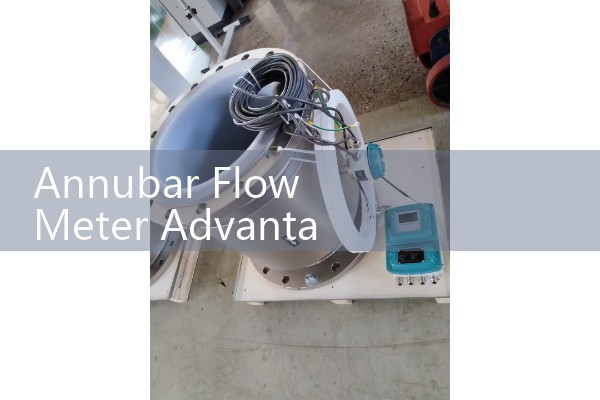
Annubar Flow Meter Advantages for Large-Diameter Gas Pipe Measurement
Quick Answer: Annubar meters measure gas flow in large pipes (DN300 and above) with minimal pressure loss, easy hot-tap installation, and a true multi-point velocity average. They are cost-effective for natural gas, flare gas, combustion air, and stack gas lines where an orifice plate would be too restrictive and an ultrasonic meter too expensive. This page explains the specific advantages, shows real installation examples, and helps you decide if an Annubar fits your pipe.
Large-diameter gas pipes are a challenge. The flow profile is rarely uniform, pipe access is limited, and shutdown costs are high. An Annubar, also called an averaging pitot tube, addresses these problems directly. It inserts a probe across the pipe, senses total pressure and static pressure at multiple points, and sends a differential pressure signal to a transmitter. The result is a stable output that reflects the real volumetric flow.
Silver Automation Instruments supplies Annubar flow meters designed for pipe sizes from DN50 up to DN3000. Our customers use them on flare headers at Vietnamese refineries, biogas lines in Indonesian palm oil mills, and compressed air mains at Mexican bottling plants. Here is a closer look at the key advantages.
Low Permanent Pressure Loss Saves Compressor Power
Gas flow measurement always consumes energy. An orifice plate can drop pressure by several hundred millibar. An Annubar probe typically blocks less than 3% of the pipe cross-section. Permanent pressure loss is often below 1% of the line pressure. For a natural gas line running at 20 bar, that difference translates directly into reduced compressor electricity consumption. In one Australian coal seam gas facility, replacing an orifice plate with an Annubar on a DN600 header saved an estimated AUD 12,000 per year in compression costs. That number comes from their own energy audit, not a datasheet.
Hot-Tap Installation Keeps Production Running
Shutting down a gas supply line is expensive and sometimes impossible. Annubar probes can be installed through a standard hot-tap fitting with a retraction valve. Our DN200 to DN1200 models use a 2-inch full-port valve. The technician drills the pipe under pressure, inserts the probe, and seals the assembly. The whole process takes a few hours. A paint factory in Thailand did this on their thermal oil heater flue gas duct (DN900) without halting production. They used a carbon steel Annubar with a Rosemount 3051S transmitter and a 4-20 mA HART signal integrated into their Yokogawa DCS.
Multi-Point Averaging Matches Real Flow Profiles
Gas flow in large pipes is seldom symmetrical. An elbow upstream creates a skewed velocity profile. A single-point measurement can be off by 10% or more. An Annubar probe senses velocity at several locations along the pipe diameter. For a DN1000 pipe, our standard probe has eight sensing ports located to match equal annular areas. This averages out the swirl and stratification. We have seen cases where an ultrasonic meter on a single path read 8% low compared to a multi-point Annubar because the path missed the high-velocity core. Most engineers skip the single-path ultrasonic on large gas lines for this reason. If you do use ultrasonic, you need at least two paths, and the cost jumps.
Cost Structure: Annubar vs Orifice vs Ultrasonic
Here is a cost comparison rooted in real purchase data. For a DN800 natural gas line at 15 bar, 20 °C:
Orifice plate + DP transmitter + long straight run requirement: pipe modifications, flanges, gaskets, and assembly push the installed cost to USD 12,000-18,000. Pressure loss adds operating cost.
Ultrasonic meter (2-path gas): calibrated meter body alone is USD 15,000-25,000, with higher-end models exceeding USD 35,000. Installation needs a bypass or spool piece.
Annubar + DP transmitter + hot-tap valve: complete material cost USD 3,500-6,500. Installation cost is lower because no pipe cutting is required. Total installed cost often stays under USD 9
Real Application: Flare Gas Metering in a Nigerian Gas Plant
A gas processing plant in Nigeria needed to measure flare gas flow in a DN900 line. The gas contained methane, CO2, and some moisture, with occasional liquid droplets. Temperature varied between 80 °C and 120 °C. An annular orifice was considered but the permanent pressure loss was unacceptable because it could affect the flare tip performance. An ultrasonic meter could work but the budget was tight. We proposed an Annubar with a Hastelloy C-276 probe body and a remote-seal DP transmitter. The multi-port design averaged the wet, pulsating flow reasonably well. Field accuracy with a PT100 temperature input and pressure compensation was around ±2% of reading. The customer connected the 4-20 mA outputs to their Emerson DeltaV system. The whole package, including engineering support via WeChat video call, cost less than half of the ultrasonic quote. We still get spare parts orders from them three years later.
Know the Limitations
An Annubar is not the best choice for every large-diameter gas pipe. Very dirty gas with sticky particles can plug the sensing holes. A purge system helps, but if the gas carries heavy tar or bitumen, we recommend a thermal mass flow meter instead. Wet gas with high liquid loading (more than 5% by mass) can cause erratic DP signals. In that case, a venturi meter with horizontal installation and drain legs works better. Very low flow velocities below 3 m/s produce a small DP signal that is hard to measure accurately. Use a high-rangeability DP transmitter like the Rosemount 3051S or the Yokogawa EJX110A. We can supply both. Also, insulate the impulse lines if the gas temperature deviates a lot from ambient. Condensation in the impulse lines leads to zero shift. We have seen this on a customer site in Chile where temperature swings from 0 °C at night to 30 °C during the day.
Temperature and Pressure Compensation
Most gas flow measurements need compensation to convert actual cubic meters per hour to normal or standard cubic meters per hour. An Annubar naturally fits this requirement. The DP transmitter gives the raw signal. A separate pressure transmitter and a PT100 temperature sensor feed into a flow computer or a PLC. Silver Automation Instruments offers integrated packages with a multi-variable DP transmitter that includes a built-in RTD and pressure sensor. This reduces tubing and potential leak points. For a DN600 compressed air line in a Brazilian automotive plant, we supplied a multi-variable Annubar assembly that output mass flow in kg/h over Modbus RTU directly to the plant energy management system. That made reporting simple.
FAQ
Which pipe sizes can an Annubar cover? Standard models from Silver Instruments cover DN50 to DN3000. For smaller pipes under DN50, we suggest a vortex flow meter.
Can an Annubar handle wet or dirty gas? Light moisture and small particles are generally acceptable with a cleanout port. For sticky or heavily solid-laden gas, contact us with the exact composition. We may recommend a different technology.
What kind of straight run does an Annubar need? Usually 10D upstream and 5D downstream for single-plane averaging. If a flow conditioner is installed, you can keep 4D upstream. We can supply the flow conditioner as part of the spool piece.
How do you avoid plugging? Periodic back-purge with instrument air or nitrogen. The probe body includes a purge port. Connect a pressure regulator and a timer solenoid valve.
How fast can you ship to Southeast Asia or the Middle East? Stock probes for DN200-DN600 ship within 5 days. Custom lengths up to DN3000 take 2-3 weeks. Contact [email protected] or call us at +86-135-1213-1526. WhatsApp is 86-135-12131526. We also provide installation supervision via remote video if your site technician needs support.