
 About Us
Vortex Flow Transmitters and Vortex Flow Measurement: Multivariable Sensing for Energy Auditing
Quick Answer: A multivariable vortex flow transmitter measures flow, temperature, and pressure in one process connection. This setup works well for steam, compressed air, and natural gas energy audits because it delivers compensated mass flow or standard volumetric flow data without three separate devices. Silver Automation Instruments supplies these meters from DN15 to DN300 with 4-20 mA HART, pulse, and RS485 Modbus outputs.
What Makes Multivariable Vortex Sensing Practical for Energy Audits
An energy audit needs reliable totalized flow data over days or weeks. A standard vortex meter only gives volumetric flow. That is a problem for steam and gas because density changes with pressure and temperature. A multivariable vortex transmitter has a built-in pressure sensor and a PT100 temperature sensor. It calculates density and outputs mass flow or standard volumetric flow. You get a complete data set from one meter body.
We have seen this on many customer sites. A ceramic tile plant in Vietnam ran a compressed air audit over two weeks. They used one 2 inch vortex transmitter on the main air header. The meter logged flow, pressure, and temperature every 10 seconds. The plant found a 22 percent leakage loss. That one meter paid for itself before the audit report was finished.
Key Parameters You Should Specify
Send us these details before you buy a vortex flow transmitter for energy auditing.
Pipe size in DN. Fluid type. Minimum, normal, and maximum flow rate. Operating temperature in degrees Celsius. Operating pressure in bar. Installation type: inline or insertion. Output required: 4-20 mA HART, pulse, or RS485 Modbus. Hazardous area classification if any, such as ATEX Zone 1 or Zone 2.
Most engineers skip the minimum flow point. In vortex metering, low flow is the biggest risk. A DN100 meter with a range of 80 to 800 cubic meters per hour will not read 15 cubic meters per hour reliably. Specify the real turndown. If your plant operates at night with low steam demand, size the meter for that low end too.
Common Installations We See in the Field
Steam boiler audits in Indonesia and Thailand often use 3 to 6 inch vortex meters on each boiler outlet. The meters measure saturated steam mass flow before and after pressure reducing stations. The plant compares steam generated versus steam used by process areas.
Compressed air audits in Australia and New Zealand use a DN50 or DN80 multivariable vortex transmitter on the main ring pipe. The pressure sensor inside the meter tracks line pressure. The temperature sensor corrects density. The result is normal cubic meters per hour. This makes leak detection much easier.
Natural gas fuel monitoring in the Middle East uses vortex meters on burners and dryers. These sites need hazardous area approvals. We supply ATEX and IECEx versions with local display and HART totalizers.
In practice, the insertion version helps for large pipes. A 24 inch compressed air main does not need a full bore flow meter. An insertion vortex transmitter is cheaper and easier to install. The probe length is based on pipe inside diameter. We can help you calculate that.
Recommended Vortex Flow Meter Models for Energy Auditing
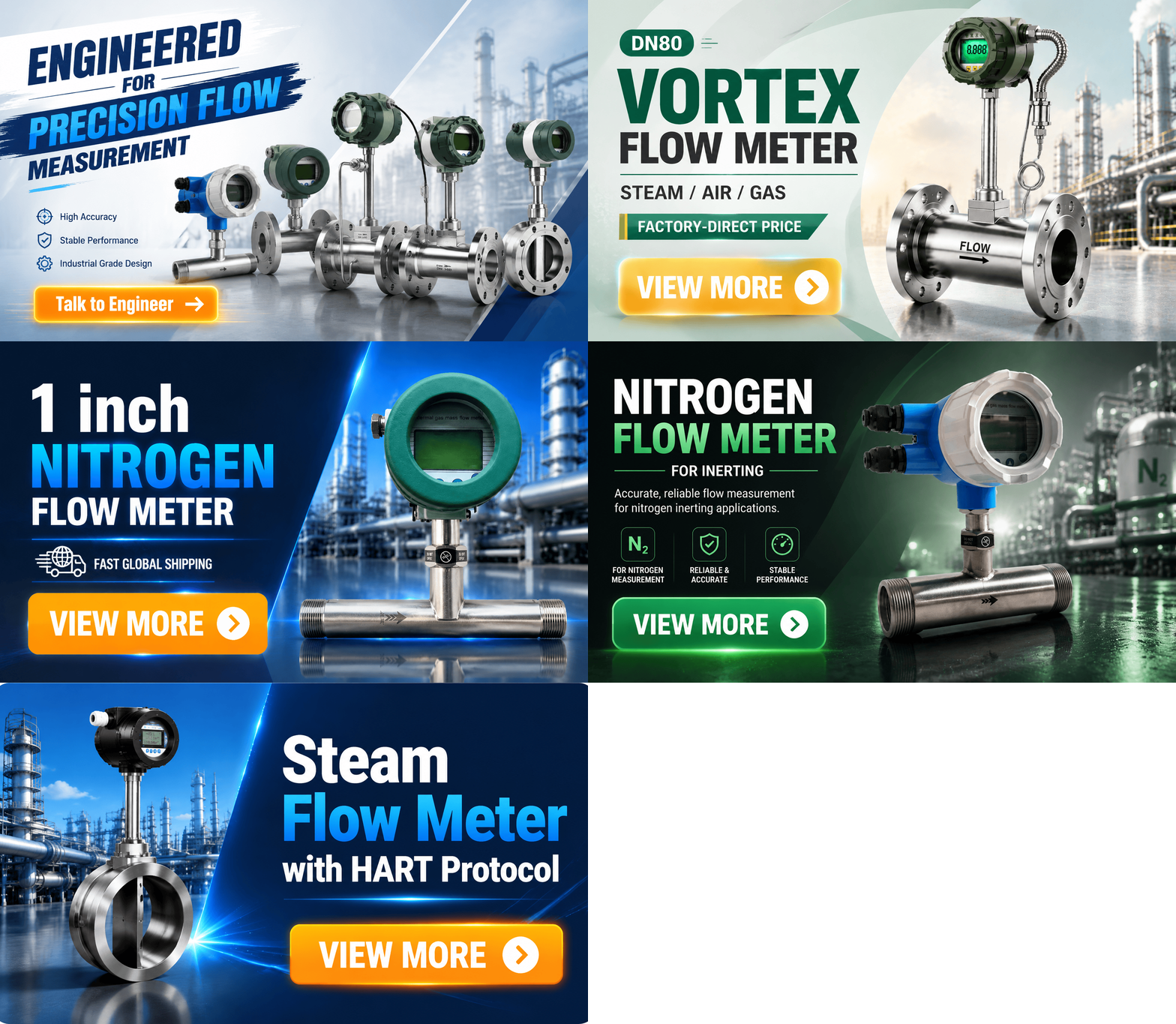
For inline steam and gas audits, Silver Instruments offers the SI-VF series vortex flow transmitter. It comes in DN15 to DN300. The meter has no moving parts. The sensor is a piezoelectric crystal outside the flow path. This reduces fouling and maintenance. Accuracy is ±1.0 percent of reading for liquids and ±1.5 percent for steam and gases. Temperature range is -40 to 250 degrees Celsius standard, with a high temperature option up to 350 degrees Celsius.
For large lines, the insertion vortex transmitter model SI-VFI covers pipe sizes from DN200 to DN1500. It includes a pressure sensor and PT100. The flow computer outputs compensated flow. Many energy auditors choose this model for main compressed air headers and flue gas lines.
For remote sites without power, a battery powered vortex meter with data logger works well. It stores totalized flow, pressure, and temperature for up to 30 days. You download data via USB or RS485. This avoids long cable runs and control system integration during the audit.
Why Use a Vortex Transmitter Instead of Separate Sensors
Here is the thing. Three separate instruments create three failure points and three calibration tasks. A multivariable vortex transmitter combines them. One process connection means one hole in the pipe. That reduces leak points. One transmitter means one set of wiring, one display, and one totalizer. For a temporary energy audit, this saves installation time.
There is a cost angle too. A separate pressure transmitter, temperature sensor, flow computer, and vortex meter can cost more than one multivariable unit. You also need more pipe fittings and more cable. In Southeast Asia and Latin America, we often see project budgets that only allow one insertion point. The multivariable option is a practical fix.
What to Send Us for a Quote
To get a firm price from Silver Automation Instruments, send us the following data.
Fluid type: saturated steam, superheated steam, compressed air, natural gas, or water. Pipe size: DN or inch. Flow range: minimum and maximum in kg per hour, cubic meters per hour, or normal cubic meters per hour. Pressure: bar or psi. Temperature: degrees Celsius. Output: 4-20 mA HART, pulse, or RS485 Modbus. Hazardous area: Zone 1, Zone 2, or safe area. Installation: inline or insertion.
Send these details to our sales team. Use the contact points below. We will recommend one specific model and provide a price quote within 24 hours.
Contact us at Tel: +86-25-68650347. WhatsApp: +86-25-52155837. WeChat: +86 15365082610. You can also visit flow-meter.com.au to see the full vortex flow meter range.
FAQ: Five Questions Engineers Ask Before Buying
1. Can a vortex meter handle wet steam?
Wet steam reduces accuracy and can damage the sensor if droplets hit the bluff body at high velocity. Install a steam separator or strainer upstream. For saturated steam audits, install the meter after a drip leg and trap. Specify steam quality if possible.
2. What is the straight pipe requirement?
Typical vortex meters need 15D upstream and 5D downstream. If you have a valve, elbow, or pump close to the meter, add a flow straightener. We can supply matched straight run sections if your pipe layout is tight.
3. Does the multivariable output show mass flow or standard flow?
Most models can output both. Configure the flow computer for your target unit. For steam, we usually set kilograms per hour or tonnes per hour. For compressed air, normal cubic meters per hour. For natural gas, standard cubic meters per hour or kilograms per hour.
4. Can we use this meter for liquids?
Yes. Vortex meters work with water, condensate, and many low viscosity chemicals. For liquids above 30 cP, vortex meter accuracy drops quickly. An oval gear flow meter is a better choice for diesel, lube oil, or syrup. For water and wastewater, conductivity does not matter. Vortex meters do not need 5 µS/cm minimum conductivity like an electromagnetic meter.
5. What is the lead time and warranty?
Standard inline models from DN15 to DN150 are usually in stock. Larger sizes and insertion probes take 5 to 10 working days. Silver Automation Instruments provides an 18 month warranty from shipment. We also supply calibration certificates and material traceability documents.
Silver Automation Instruments serves industrial users and distributors across Southeast Asia, Oceania, Latin America, Africa, and the Middle East. We focus on practical flow measurement for oil and gas, water and wastewater, chemicals, food and beverage, and marine applications. Send us your pressure (bar), temperature (°C), pipe size (DN), and flow range. We will reply with a specific vortex flow transmitter quotation.
 Contact Us
 Related AD