

 Current position >About Us
Vortex Flow Transmitters and Vortex Flow Measurement: Multivariable Sensing for Energy Auditing
Quick Answer: A multivariable vortex flow transmitter measures flow, temperature, and pressure in one process connection. This setup works well for steam, compressed air, and natural gas energy audits because it delivers compensated mass flow or standard volumetric flow data without three separate devices. Silver Automation Instruments supplies these meters from DN15 to DN300 with 4-20 mA HART, pulse, and RS485 Modbus outputs.
What Makes Multivariable Vortex Sensing Practical for Energy Audits
An energy audit needs reliable totalized flow data over days or weeks. A standard vortex meter only gives volumetric flow. That is a problem for steam and gas because density changes with pressure and temperature. A multivariable vortex transmitter has a built-in pressure sensor and a PT100 temperature sensor. It calculates density and outputs mass flow or standard volumetric flow. You get a complete data set from one meter body.
We have seen this on many customer sites. A ceramic tile plant in Vietnam ran a compressed air audit over two weeks. They used one 2 inch vortex transmitter on the main air header. The meter logged flow, pressure, and temperature every 10 seconds. The plant found a 22 percent leakage loss. That one meter paid for itself before the audit report was finished.
Key Parameters You Should Specify
Send us these details before you buy a vortex flow transmitter for energy auditing.
Pipe size in DN. Fluid type. Minimum, normal, and maximum flow rate. Operating temperature in degrees Celsius. Operating pressure in bar. Installation type: inline or insertion. Output required: 4-20 mA HART, pulse, or RS485 Modbus. Hazardous area classification if any, such as ATEX Zone 1 or Zone 2.
Most engineers skip the minimum flow point. In vortex metering, low flow is the biggest risk. A DN100 meter with a range of 80 to 800 cubic meters per hour will not read 15 cubic meters per hour reliably. Specify the real turndown. If your plant operates at night with low steam demand, size the meter for that low end too.
Common Installations We See in the Field
Steam boiler audits in Indonesia and Thailand often use 3 to 6 inch vortex meters on each boiler outlet. The meters measure saturated steam mass flow before and after pressure reducing stations. The plant compares steam generated versus steam used by process areas.
Compressed air audits in Australia and New Zealand use a DN50 or DN80 multivariable vortex transmitter on the main ring pipe. The pressure sensor inside the meter tracks line pressure. The temperature sensor corrects density. The result is normal cubic meters per hour. This makes leak detection much easier.
Natural gas fuel monitoring in the Middle East uses vortex meters on burners and dryers. These sites need hazardous area approvals. We supply ATEX and IECEx versions with local display and HART totalizers.
In practice, the insertion version helps for large pipes. A 24 inch compressed air main does not need a full bore flow meter. An insertion vortex transmitter is cheaper and easier to install. The probe length is based on pipe inside diameter. We can help you calculate that.
Recommended Vortex Flow Meter Models for Energy Auditing
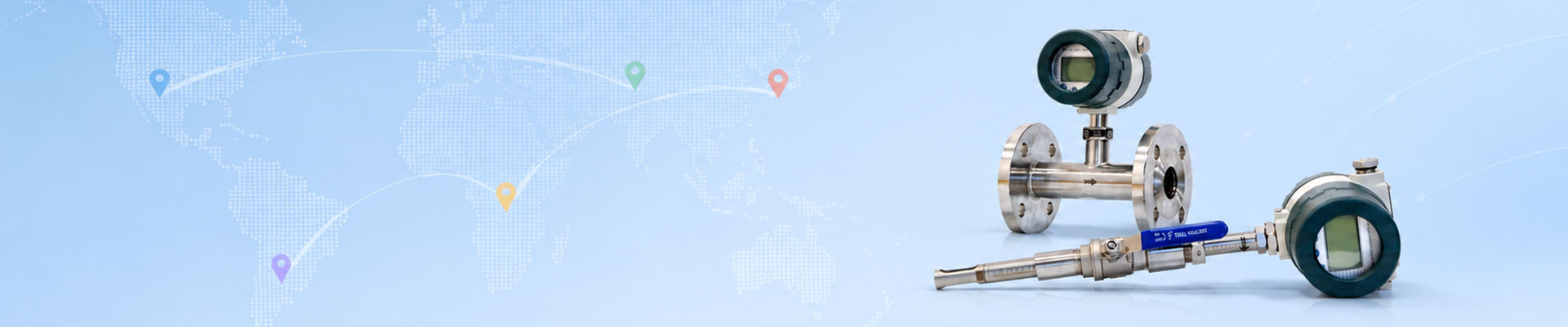
For inline steam and gas audits, Silver Instruments offers the SI-VF series vortex flow transmitter. It comes in DN15 to DN300. The meter has no moving parts. The sensor is a piezoelectric crystal outside the flow path. This reduces fouling and maintenance. Accuracy is ±1.0 percent of reading for liquids and ±1.5 percent for steam and gases. Temperature range is -40 to 250 degrees Celsius standard, with a high temperature option up to 350 degrees Celsius.
For large lines, the insertion vortex transmitter model SI-VFI covers pipe sizes from DN200 to D