

『On Site Flow Meter Calibration: Field Verification and Master Loop Testing』Related information(flow rotameter|digital flow meter|balo meter|hydraulic flow meter|volumetric meter|positive displacement meter|pitot tube flow meter|displacement meter|cfm meter|variable area flow meter|inline flow meter|differential pressure flow meter|calibrated flow meter|velocity meter|paddle wheel flow meter|oval gear flow meter|anemometer hvac|multiphase flow meter|doppler flow meter|thorpe tube flowmeter|heat flow meter)
On Site Flow Meter Calibration: Field Verification and Master Loop Testing
Quick Answer: On site flow meter calibration checks two things. First, the flow meter sensor and transmitter stay accurate in your real process conditions. Second, the 4-20 mA HART or pulse signal arriving at the PLC or recorder matches the actual flow reading. Silver Automation Instruments supplies field verification, master loop testing, and replacement meters for water, oil, gas, chemical, food, and marine applications.
When On Site Calibration Makes Sense
Most engineers only request calibration after a flow reading looks wrong. In practice, a small error can hide for months. A batch might be off by 2 percent or a custody transfer total does not match the tank level. On site calibration makes sense when removing the meter is expensive or impossible during a running process. It is also useful for hygienic food lines, long welded pipe runs, and remote sites in Southeast Asia or the Middle East where shipping a meter to a lab can take three weeks.
We have seen this on customer sites many times. A seawater desalination plant in Oman had a DN200 electromagnetic flow meter welded into a fiberglass pipe. The plant could not remove the meter without a shutdown. Field verification and master loop testing found a grounding problem and a PLC offset. The flow meter itself was still within 0.4 percent.
Field Verification vs Master Loop Testing
Field verification checks the sensor and transmitter. It can include a zero check, a known signal injection, or a reference device mounted on the outside of the pipe. It is not the same as a full laboratory calibration. It tells you if the meter is healthy, repeatable, and stable. It does not always prove volumetric accuracy to a national standard.
Master loop testing checks the wiring and the control system. A technician injects 4.00 mA, 12.00 mA, and 20.00 mA signals at the meter location. The PLC, DCS, or paperless recorder should read the same values. If the PLC reads 4.6 mA at a 4.00 mA injected signal, the loop or input card has an offset. That offset may look like a flow meter error. It is actually a signal loop error.
Field Checks for Common Flow Meter Types
Coriolis mass flow meters: We check zero stability, drive gain, pickoff voltage, live density, and temperature. A stable zero matters on low flow lines. For example, a chemical dosing application at 0 to 30 kg/h needs a zero value checked under actual pressure and temperature. A shift of 0.05 kg/h can cause a 5 percent error at the low end.
Electromagnetic flow meters: We check electrode resistance, coil resistance, grounding, empty pipe detection, and flow simulation. If the liner is damaged or electrodes are coated, the meter may still pass an electronic test but fail in real accuracy. A wastewater plant with grease coating often needs a cleaning before verification.
Ultrasonic flow meters: We check signal strength, sound speed, path angle, and transducer coupling. Clamp on meters are sensitive to pipe surface preparation. A poorly coupled transducer can make a good meter look bad.
Vortex flow meters: We check the sensor signal amplitude, K factor, and pressure compensation. Vibration from nearby pumps is a common false problem. A vortex meter on a steam line with wet steam can read high if the density compensation is wrong.
Oval gear flow meters: We check pulse output, mechanical clearance, and repeatability. High viscosity fluids above 500 cP can mask wear for a while. A paint manufacturer in Southeast Asia found that repeatability dropped from 0.5 percent to 2.1 percent because of worn gears. Field verification caught the problem before a bad batch shipped.
<
Master Loop Testing for 4-20 mA HART and Pulse Signals
Many flow meters output 4-20 mA with HART. Some output pulse or frequency. Master loop testing checks the full chain from the flow meter terminal to the control system. We inject a known mA value and read the value at the PLC or recorder. For pulse outputs, we inject a known frequency and check the totalizer.
Here is a real example. A water treatment plant in Thailand used a DN100 electromagnetic flow meter with 4-20 mA HART. The plant operator saw a flow offset of 0.6 mA on the SCADA. The flow meter and the HART reading were correct. The issue was an input card scaling error. A one hour master loop test found the problem. The plant avoided replacing a good flow meter.
What On Site Calibration Cannot Fix
On site calibration cannot repair a bent Coriolis tube, a shorted magnetic coil, a cracked ultrasonic transducer, or a worn oval gear rotor. It cannot provide the same uncertainty as an ISO 17025 flow laboratory. If field verification shows poor repeatability or an unstable zero, the meter usually needs a repair or lab calibration. We will tell you if removal is needed. Do not keep a bad meter on a custody transfer line.
How to Prepare for a Field Service Visit
Send us your fluid name, pressure in bar, temperature in °C, pipe size in DN, and flow range. For a desalination plant, you might send this: seawater, 6 bar, 35 °C, DN150, 0 to 200 m3/h, 4-20 mA HART. This lets our engineer bring the right reference device and test leads. Also tell us the PLC or recorder model and whether the loop is powered by the PLC or an external supply.
Contact Silver Automation Instruments
We provide on site flow meter calibration support, field verification, master loop testing, and new flow meters for replacement. Silver Instruments supplies Coriolis mass flow meters, electromagnetic flow meters, ultrasonic flow meters, vortex flow meters, oval gear flow meters, thermal mass flow meters, pressure transmitters, and paperless recorders. Send us your pressure in bar, temperature in °C, pipe size in DN, and flow range. Tel: +86-135-1213-1526. Whatsapp: 86-135-12131526. WeChat: +86 13512131526. Website: flow-meter.com.au
FAQ
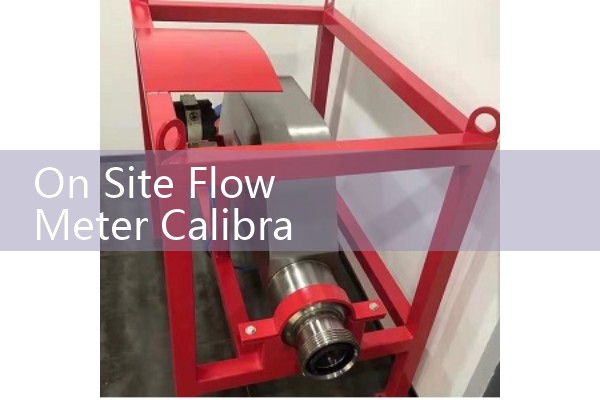
Can you calibrate a flow meter without removing it from the pipe? Yes. Field verification and master loop testing can be done without removal. Full wet calibration against a standard usually requires removal or a mobile calibration rig.
What is the difference between field verification and laboratory calibration? Field verification checks the meter health, zero, span, and output loop. Laboratory calibration applies known flow and adjusts the meter to a documented standard.
How often should on site flow meter calibration be done? For custody transfer, once per year is common. For process control, every 12 to 24 months is enough for most sites. Dirty water, gas with moisture, or abrasive fluids may need more frequent checks.
What signals do you check during master loop testing? We check 4-20 mA, HART, pulse, and frequency. We compare the injected signal to the PLC, DCS, or recorder reading.
Do you supply flow meters if the field unit cannot be repaired? Yes. Silver Automation Instruments supplies Coriolis, electromagnetic, ultrasonic, vortex, oval gear, and thermal mass flow meters. We also supply pressure transmitters and paperless recorders.
 Hot Blog
 Related AD