

『Magnetic Flow Meter Sensor: Fundamental Induction Element Spool Pieces』Related information(flow rotameter|digital flow meter|balo meter|hydraulic flow meter|volumetric meter|positive displacement meter|pitot tube flow meter|displacement meter|cfm meter|variable area flow meter|inline flow meter|differential pressure flow meter|calibrated flow meter|velocity meter|paddle wheel flow meter|oval gear flow meter|anemometer hvac|multiphase flow meter|doppler flow meter|thorpe tube flowmeter|heat flow meter)

Magnetic Flow Meter Sensor: Fundamental Induction Element Spool Pieces
Quick Answer: A magnetic flow meter sensor spool piece is a flanged pipe section with built in excitation coils and electrodes. It measures conductive liquid flow with no moving parts and no added pressure loss. Silver Automation Instruments supplies these spool pieces for line sizes from DN15 to DN3000 with liner and electrode options matched to the process fluid.
What Is the Magnetic Flow Meter Sensor Spool Piece?
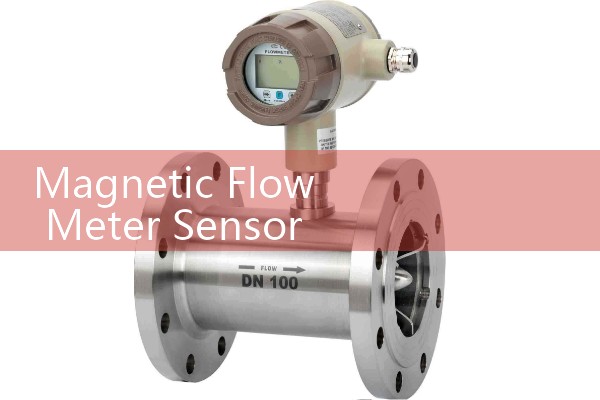
The sensor body is the spool piece. In most magnetic flow meters the primary element is a short length of pipe with two process connections. Inside the spool piece there are two excitation coils. There are also two or four electrodes that contact the liquid. The coils create a magnetic field across the pipe cross section. When a conductive liquid flows through this field it generates a small voltage. That voltage is proportional to flow velocity.
Engineers often call this the spool piece because it looks like a replaceable pipe section. It can be wafer type or flanged type. Wafer type suits smaller lines where the meter slides between existing flanges. Flanged type is more common for chemical plants, water plants, and oil and gas sites.
How the Induction Element Works in the Spool Piece
Faraday law of induction is the measuring principle. A magnetic field is applied at 90 degrees to flow direction. Conductive liquid passing through the field acts like a moving conductor. The induced voltage is picked up by electrodes mounted flush with the liner. The meter converts this voltage to flow rate. No rotating parts and no obstructions sit in the flow path. This is why magnetic flow meters suit slurry, wastewater, and corrosive acids.
The liquid needs a minimum conductivity. Most Silver Instruments electromagnetic sensors work reliably above 5 µS/cm. Some special low conductivity designs can handle 1 µS/cm for specific chemicals. For demineralized water or condensate below this level a magnetic flow meter is not the right choice. In practice we ask customers to confirm conductivity before quoting.
Spool Piece Materials and Process Connections
The spool piece material is normally carbon steel or stainless steel. The wetted liner can be PTFE, PFA, hard rubber, soft rubber, or polyurethane. PTFE and PFA liners handle aggressive acids and high temperature up to 150 °C. Rubber liners suit water and wastewater up to 80 °C. Electrode materials include 316L stainless steel, Hastelloy C, titanium, tantalum, and platinum. For seawater and brine we often choose titanium or Hastelloy C. For sulfuric acid we use tantalum or platinum.
Process connections follow common flange standards. We supply ANSI 150 and 300, DIN PN10 and PN16, JIS 10K and 20K, and AS2129 Table D and E for Australia. Line sizes go from DN15 to DN3000. Pressure ratings are matched to the flange and liner. Typical maximum pressure is PN40 for smaller sizes. Temperature limits depend on liner and mounting style. Integral mount sensors handle up to 120 °C. Remote mount sensors handle up to 180 °C.
For standard water and wastewater lines we recommend the SIL-MAG-DN series with rubber liner and 316L electrodes. For acids and aggressive chemicals the SIL-MAG-PFA series with PTFE or PFA liner is a better match. For hazardous areas we supply the SIL-MAG-EX series with ATEX Zone 1 certification and remote electronics.
Marine, Desalination, Chemical and Wastewater Applications
Seawater flow measurement is one common request in the Middle East and Australia. A desalination plant in Western Australia ordered DN200 PTFE lined magnetic flow meters for brine transfer. The field conditions included 45 °C ambient temperature and salt spray. We supplied IP68 remote sensors with titanium electrodes. That order ran for five years without electrode replacement.
In Southeast Asia a paint manufacturer in Vietnam needed a meter for water based resin with viscosity up to 200 cP. The pipe size was DN
Wastewater plants in Latin America use magnetic flow meters for aerated sludge and return activated sludge lines. Mining sites in Africa use them for tailings slurry. Food and beverage plants in New Zealand choose sanitary spool pieces with PFA liners and tri clamp connections for milk, beer, and juice. The same induction element works across all these liquids as long as conductivity is above the minimum threshold.
Output Signals and System Integration
Silver Instruments spool piece sensors can be ordered with a compact converter or a remote converter. Standard outputs are 4-20 mA with HART, pulse, and RS485 Modbus. The 4-20 mA HART output is common for PLC and DCS integration. Pulse output suits batching and totalizer panels. RS485 Modbus is useful for multi-meter networks in large water schemes.
Most engineers skip a separate flow computer because the converter already provides total flow, velocity, and empty pipe detection. The empty pipe detection function checks electrode contact with the liquid. This prevents false readings when the pipe drains. We also provide optional PT100 temperature input for heat metering or density compensation in a separate display unit. For hazardous areas the sensor can be supplied with ATEX Zone 1 or Zone 2 certification and remote mounted electronics in a safe area.
Selection Checklist for Magnetic Flow Meter Spool Pieces
To get a firm quote we ask for the following details. Pipe size in DN or inches. Normal and maximum flow rate in m³/h or l/min. Fluid name and chemical concentration. Operating pressure in bar. Operating temperature in °C. Fluid conductivity in µS/cm. Required liner and electrode material. Power supply 24 V DC or 220 V AC. Output signal needed. Hazardous area classification if any. In most cases a complete data sheet is not needed. These ten points are enough for us to select a magnetic flow meter sensor spool piece.
Quick Quote Request
Send us your pipe size (DN), flow range, pressure (bar), temperature (°C), and fluid conductivity. Silver Automation Instruments will reply with a model recommendation and price. Contact our engineers by Tel: +86-135-1213-1526 or Whatsapp: 86-135-12131526. WeChat: +86 13512131526. You can also visit flow-meter.com.au for technical drawings and product series. We ship to Southeast Asia, Oceania, Latin America, Africa, and the Middle East from our Nanjing factory.
FAQ: 5 Key Questions About Magnetic Flow Meter Spool Pieces
Q: What is the minimum pipe size for a magnetic flow meter spool piece?
A: DN15 is the smallest standard size. Silver Instruments also supplies DN10 for low flow applications in chemical dosing. Below DN10 the flow profile becomes unstable in most cases.
Q: Can a magnetic flow meter spool piece measure oil or hydrocarbon?
A: No. The liquid must be conductive. Crude oil, diesel, and pure hydrocarbons have conductivity far below 5 µS/cm. For these fluids use an oval gear flow meter or a Coriolis mass flow meter.
Q: What liner is best for sulfuric acid?
A: PFA or PTFE liner with tantalum or platinum electrodes. The exact selection depends on acid concentration and temperature. For strong sulfuric acid above 80 percent concentration we often use PFA with platinum electrodes.
Q: Does the spool piece create pressure drop?
A: No. The full bore design has the same diameter as the connected pipe. It does not block the flow. This matters for sludge, slurry, and viscous food products.
Q: Can the sensor be installed in a partially full pipe?
A: The pipe must remain full for accurate measurement. Empty pipe detection is available and standard on our remote converters. For open channels or partially full pipes a different technology is required.
 Hot Blog
 Related AD