

『Flow Meter Problems Checklist: Identifying Empty Pipes, Calibration Drifts, and Noise』Related information(flow rotameter|digital flow meter|balo meter|hydraulic flow meter|volumetric meter|positive displacement meter|pitot tube flow meter|displacement meter|cfm meter|variable area flow meter|inline flow meter|differential pressure flow meter|calibrated flow meter|velocity meter|paddle wheel flow meter|oval gear flow meter|anemometer hvac|multiphase flow meter|doppler flow meter|thorpe tube flowmeter|heat flow meter)
Flow Meter Problems Checklist: Identifying Empty Pipes, Calibration Drifts, and Noise
Quick Answer: Empty pipes can produce false zero readings or frozen outputs. Calibration drift appears as a steady offset or K-factor shift. Noise usually comes from grounding faults, VFD cables, air bubbles, or pump pulsation. Check these three areas before you replace any flow meter.
How do you identify an empty pipe on a flow meter?
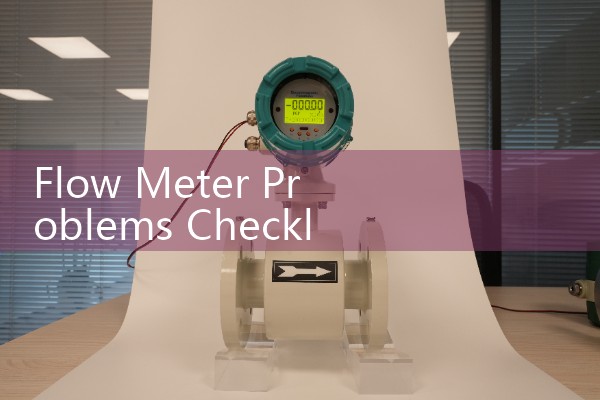
Most electromagnetic flow meters use an empty pipe detection function. The transmitter checks electrode resistance or fluid conductivity. When the pipe drains, the resistance rises. The meter then shows an empty pipe alarm or holds the current output. Some entry level magmeters just display zero. Others freeze the last value. Two meters on the same drained line can show different results, so do not assume calibration drift first.
We have seen this on customer sites many times. A wastewater station in the Philippines had a DN200 electromagnetic flow meter that held a reading for 20 minutes after each pump cycle. The operator suspected calibration drift. The real cause was a leaking check valve. Water drained back after the pump stopped. The meter detected an empty pipe and held the value. The fix was a new check valve, not a calibration.
Before you open the calibration menu, confirm the pipe is full. Look for a closed upstream valve, a stopped pump, a drain valve left open, or an air pocket at a high point. Silver Instruments supplies electromagnetic flow meters with selectable empty pipe alarm action. For sewage and raw water, we normally recommend rubber liners and 316L electrodes. For seawater and brine, ask for PTFE liners and titanium electrodes.
What does calibration drift look like?
Calibration drift is not random. It moves in one direction or stays as a fixed offset. A meter may read 0.8 m³/h at zero flow. That is a zero shift. A meter may read 10 percent high across the range. That is a slope error. On an oval gear flow meter, gear wear changes the pulse output per litre. On a vortex flow meter, erosion on the bluff body changes the K-factor. On a Coriolis mass flow meter, zero drift often comes from pipe stress or two-phase flow.
In practice, most engineers skip the mechanical check and go straight to the transmitter. Do not do that. First confirm the pipe is full and free of air. Then compare the meter with a reference device. You can use a clamp-on ultrasonic flow meter or fill a known volume and read the totalizer. For 4-20 mA HART meters, check the loop current at zero flow. If you see 4.03 mA instead of 4.00 mA, the zero point is off.
Last year a customer in Vietnam asked us about a thermal mass flow meter on a compressed air line. The meter read 12 percent low. The sensor was clean. The actual problem was a wrong inner pipe diameter in the transmitter. The customer had replaced a DN50 line with DN65 pipe but did not update the parameter. After we corrected the pipe ID, the reading matched the reference. That is a configuration error, not drift.
For chemical liquids and compressed gas, Silver Instruments often provides Coriolis mass flow meters for direct mass output in kg/h. For clean water and wastewater, our electromagnetic flow meters with zero check functions are a reliable lower cost option.
What causes noise in flow meter signals?
Noise shows up as unsteady flow values, erratic totalizer counts, or a jumping 4-20 mA signal. The main sources are electrical noise, grounding faults, air bubbles, solids, and pump pulsation. VFD cables near signal wires can induce spikes. Poor grounding can create a floating reference.
Here is a specific case. A paint manufacturer in Southeast Asia had a Coriolis meter on a resin line. The output swung between 80 and 140 kg/h. The pump was a diaphragm pump with strong pulsation. We set the damping to 3 seconds and the reading settled at 110 kg/h. The meter was fine. The process was
If damping does not help, check for air ingestion. Look at pump seals, flange gaskets, and suction line connections. On electromagnetic flow meters, an air pocket can trigger empty pipe detection and hold the output. Ground the shield at one point only. Use a shielded twisted pair for signal cables. Do not run signal cables in the same conduit as power cables. If the noise starts after a VFD installation, check that first.
We saw a water treatment plant in the Middle East with a DN100 electromagnetic flow meter that jumped from 0 to 15 m³/h every time a nearby pump started. The ground wire was connected to a rusty bolt on a plastic pipe. After we bonded the grounding ring to a proper earth point, the signal became stable. That was a simple grounding fix. No new meter was needed.
Quick checklist before you replace a flow meter
Use this order. Confirm the pipe is full and liquid is moving. Check for air bubbles and solids. Inspect wiring, grounding, and nearby VFD cables. Compare the zero flow output with the factory value. Check installed parameters against the calibration certificate and process data. If the meter still fails after these steps, then remove it for inspection or request a replacement.
Which flow meter type fits your process?
Do not change the meter type before you find the root cause. A better meter will not fix a leaking check valve or a wrong pipe ID. But if you confirm the meter is not suitable, we can help. For conductive liquids above 5 µS/cm, a Silver Instruments electromagnetic flow meter works well. For mass flow of chemicals, oils, and syrups, a Coriolis mass flow meter gives direct mass output. For gas and steam, a vortex flow meter with noise filtering is common. For diesel, fuel oil, or viscous media, an oval gear flow meter gives repeatable pulse output.
For a quick quote, send us your pressure (bar), temperature (°C), pipe size (DN), and flow range. Also tell us your fluid and required output. Contact Silver Automation Instruments. Tel: +86-25-68650347. Whatsapp: +86-25-52155837. WeChat: +86 15365082610.
Frequently Asked Questions
Can a flow meter read zero when the pipe is empty?
Yes. Many electromagnetic flow meters read zero or hold the last value. Some units show an empty pipe alarm. A meter with empty pipe detection is easier to troubleshoot because the alarm tells you the pipe is not full. If your meter does not have this feature, install a sight glass or check pressure at the low point.
How do I know if calibration drift is real?
Compare the meter with a known reference. Use a clamp-on ultrasonic meter, a weigh scale, or a calibrated volume. If the offset is constant across the flow range, you likely have a zero shift. If the error increases with flow, you may have a K-factor or slope error. Check transmitter parameters before opening the sensor.
Why does my flow meter signal jump when the pump starts?
Often this is electrical noise from the motor or VFD. Check cable routing and grounding. On electromagnetic flow meters, use grounding rings on plastic or lined pipes. Separate signal cables from power cables. Increase damping only after you rule out wiring faults.
Can air bubbles cause calibration drift?
Air bubbles usually cause noise or under-reading, not a smooth drift. If the meter reads low or unstable, check pump seal leaks, suction line leaks, or gas release at low pressure. A back pressure valve often solves gas breakout on liquid lines.
What should I send for a flow meter quote or troubleshooting support?
Send us your fluid type, conductivity in µS/cm if known, viscosity in cP if it is not water, pressure in bar, temperature in °C, pipe size in DN, and flow range in m³/h or kg/h. Also tell us whether you need 4-20 mA HART, pulse, Modbus, or a local display. Silver Automation Instruments will answer within one business day.
 Hot Blog
 Related AD