

『Differential Pressure Flow Meter Working Principle: Hydrodynamic Pressure Drop Senses』Related information(flow rotameter|digital flow meter|balo meter|hydraulic flow meter|volumetric meter|positive displacement meter|pitot tube flow meter|displacement meter|cfm meter|variable area flow meter|inline flow meter|differential pressure flow meter|calibrated flow meter|velocity meter|paddle wheel flow meter|oval gear flow meter|anemometer hvac|multiphase flow meter|doppler flow meter|thorpe tube flowmeter|heat flow meter)

Differential Pressure Flow Meter Working Principle: Hydrodynamic Pressure Drop Senses
Quick Answer
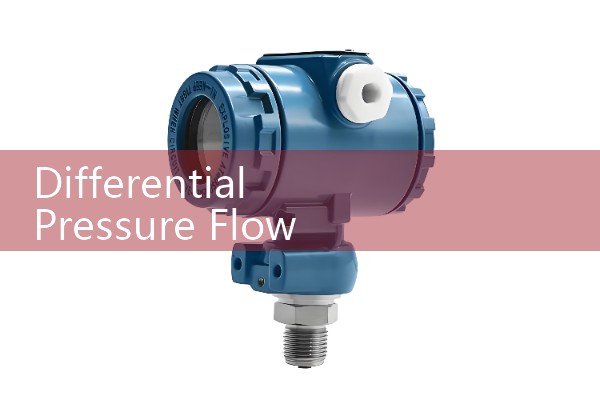
A differential pressure flow meter senses flow by measuring the pressure drop across a primary element such as an orifice plate, Venturi tube, or flow nozzle. The pressure drop increases with flow rate and follows a square root relationship. Silver Instruments supplies complete DP flow meter packages with 4-20 mA HART transmitters and engineered primary elements for gas, steam, and liquid lines.
How Hydrodynamic Pressure Drop Creates a Flow Signal
Fluid moves through a restriction in the pipe. Velocity increases at the restriction. Static pressure drops at the same point. A DP transmitter connects to the high pressure side before the restriction and the low pressure side at or downstream of the restriction. The transmitter measures the difference in static pressure.
Bernoulli equation describes this trade. Higher velocity means lower static pressure. The square root of the differential pressure is proportional to flow rate. Because of this, a DP transmitter normally has a square root output function. Most engineers skip the math but check the flow range in kg/h, m3/h, or t/h during commissioning.
Primary Elements and Typical Installations
Orifice plates are the most common primary element. They work well for clean liquids, natural gas, and steam. Venturi tubes have lower permanent pressure loss. Flow nozzles handle high velocity steam and gas. Averaging pitot tubes fit large ducts and stack gas lines. In practice, a wastewater plant in Malaysia may use a Venturi tube for raw sewage feed because solids can pass through without clogging.
Installation needs straight pipe upstream and downstream. For an orifice plate, you need 10 to 40 diameters of upstream straight run depending on the fittings. A DP transmitter with a three valve manifold allows safe isolation. Remote seals are common for hot, corrosive, or viscous fluids.
Materials matter. 316L stainless steel covers many chemical and water applications. Hastelloy C diaphragms suit seawater and acid lines. The primary element can be PTFE lined for aggressive chemical service.
Specific Product Recommendations from Silver Instruments
Silver Instruments offers the SI-3351DP smart differential pressure transmitter. It outputs 4-20 mA HART and measures spans from 0 to 100 mbar up to 0 to 40 bar. Accuracy is plus or minus 0.075 percent of span. The housing is IP67 and has Ex d IIC T6 certification. For hot steam, we supply the same transmitter with a 316L manifold and remote diaphragm seals.
For wastewater and slurry lines, we recommend the SI-DP100 with ceramic or 316L sensors and a Venturi primary element. A customer in Vietnam ordered this setup last year for a desalination plant seawater intake line. The pipe was DN300, pressure 8 bar, temperature 32 degrees C, and flow range 0 to 1200 m3/h.
For compressed air and natural gas, an orifice plate with the SI-3351DP is a practical choice. We also supply complete DP flow meter kits with an orifice plate, impulse tubing, manifold, and transmitter. Many distributors in the Middle East request this package for natural gas boiler feed lines.
Accuracy, Range, and Application Limits
A standard DP flow meter with orifice plate delivers about 1 to 2 percent of full scale accuracy. Venturi and flow nozzle systems can re
Turndown is a known limit. A DP flow meter normally works best over a 3 to 1 or 5 to 1 flow range. Below that range the signal gets small and stability drops. If you need a 20 to 1 turndown, many engineers switch to an electromagnetic flow meter or Coriolis mass flow meter.
Here is the thing. DP flow meters still win on price for steam and gas lines above DN50. They are simple, rugged, and available in many materials. We have seen this on customer sites many times in the oil and gas terminals of Australia and Indonesia.
DP Flow Meter Price and Quote Details
Price depends on pipe size, primary element type, transmitter model, materials, and hazardous area certification. A DN50 orifice plate package with a basic DP transmitter may cost less than a DN600 Venturi system with Hastelloy remote seals. To get an accurate quote, send us your pressure in bar, temperature in degrees C, pipe size in DN, flow range, and fluid type.
Silver Instruments can also supply pressure transmitters, electromagnetic flow meters, ultrasonic flow meters, Coriolis mass flow meters, and paperless recorders from the same factory. This reduces your vendor list and freight cost for projects in Africa, Latin America, and Southeast Asia.
Contact Silver Instruments for a DP Flow Meter Quote
Send your application data to us. Tel: +86-25-68650347. Whatsapp: +86-25-52155837. WeChat: +86 15365082610. You can also visit flow-meter.com.au for product specifications. Tell us your fluid, pressure, temperature, pipe size, and flow range. We will reply with a recommended model, delivery time, and price in USD within one business day.
FAQ: Differential Pressure Flow Meter Working Principle
What is the working principle of a differential pressure flow meter?
A differential pressure flow meter uses a restriction in the pipe. The restriction creates a pressure drop. The DP transmitter measures that pressure drop and converts it to a flow rate using the square root relationship.
Which primary element is best for wastewater with solids?
A Venturi tube is often better than an orifice plate for wastewater with solids. It has a smooth throat and lower clogging risk. For severe solids, consider a full bore electromagnetic flow meter instead.
Can a DP flow meter measure steam flow?
Yes. DP flow meters work well for saturated and superheated steam. Use a flow nozzle or orifice plate with a condensing chamber or remote seals. Include temperature and pressure compensation for mass flow.
What is the typical accuracy of a DP flow meter?
Most orifice plate systems are accurate to 1 to 2 percent of full scale. Venturi and flow nozzle systems can reach 0.5 to 1 percent with calibration. The transmitter itself is much more accurate but the primary element and installation determine system accuracy.
How do I get a DP flow meter price from Silver Instruments?
Send us your fluid, pressure in bar, temperature in degrees C, pipe size in DN, and flow range. Contact Tel: +86-25-68650347, Whatsapp: +86-25-52155837, or WeChat: +86 15365082610. We will recommend a model and provide a quotation.
 Hot News
 Related AD