

『Flow Meter Sizing Guidelines: Avoiding Over-Sizing and Signal Under-Range Inaccuracies in Pipes』Related information(flow rotameter|digital flow meter|balo meter|hydraulic flow meter|volumetric meter|positive displacement meter|pitot tube flow meter|displacement meter|cfm meter|variable area flow meter|inline flow meter|differential pressure flow meter|calibrated flow meter|velocity meter|paddle wheel flow meter|oval gear flow meter|anemometer hvac|multiphase flow meter|doppler flow meter|thorpe tube flowmeter|heat flow meter)
Flow Meter Sizing Guidelines: Avoiding Over-Sizing and Signal Under-Range Inaccuracies in Pipes
Quick Answer: Do not size a flow meter by matching pipe diameter only. An oversized meter forces low velocity at normal flow and can drop below the sensor minimum, causing signal under-range errors. Send our engineers the minimum, normal and maximum flow rate, pressure, temperature and pipe size before you select a DN.
Why Pipe Size Is Not the Sizing Rule
Many engineers replace a flow meter with the same DN as the existing pipe. This is the fastest route to an oversized meter. A pipe size is often based on future capacity, not current flow. So the operating flow can be far below the meter range. We have seen this on customer sites many times.
An electromagnetic flow meter needs a minimum fluid velocity, usually 0.1 m/s. For reliable accuracy, target 0.5 m/s to 3 m/s. If a DN80 electromagnetic meter is installed on a pipe that runs at 0.2 m/s, the reading may be noisy or cut to zero. The signal is too weak at the electrodes.
Vortex flow meters are worse. They need a minimum Reynolds number to generate a stable shedding frequency. A DN100 vortex meter on a low velocity compressed air line often shows zero flow even when flow exists.
Signal Under-Range Modes in Different Meter Types
Each flow meter type has a lower signal limit. Here is the thing. Oversizing pushes you toward that limit faster than you expect.
For electromagnetic flow meters, the measured voltage is proportional to velocity. Low velocity means microvolt level signals. Noise from slurry, chemical coatings or poor grounding can exceed the flow signal. This creates zero instability.
For vortex flow meters, over-sizing reduces the bluff body shedding frequency. Below the cutoff, the transmitter may output 0 kg/h or hold the last value. Steam and gas applications are sensitive because density changes alter the mass flow reading at low velocity.
For Coriolis mass flow meters, over-sizing is less likely to suppress the signal because they measure mass directly. But a very large sensor on a very small flow will still reduce accuracy at the low end. You pay for a bigger remote transmitter, heavier flanges and unnecessary pressure drop.
For thermal mass flow meters, over-sizing can reduce the cooling effect at low flow. The sensor may read zero or behave in a non-linear way.
Required Flow Data for a Sizing Check
Before requesting a quote, prepare seven numbers. Pipe inner diameter or DN. Minimum flow rate. Normal flow rate. Maximum flow rate. Fluid name or composition. Operating temperature. Operating pressure.
For liquid chemicals, include viscosity in cP. For gas or steam, include density or reference conditions. For wastewater, include solids content if the application involves sludge. A paint manufacturer in Southeast Asia gave us 0.4 m3/h minimum and 3.2 m3/h maximum on a DN50 pipe. The correct meter was a DN15 electromagnetic flow meter, not DN50. Without that data, the quote would have been wrong.
Use kg/h for mass flow, m3/h for volumetric flow, bar for pressure and °C for temperature. If the minimum flow is unknown, use the smallest batch size or the lowest pump speed as a reference.
Quick Sizing Guide by Meter Type
This is not a universal rule. Use it as a first check only.
Electromagnetic flow meters: Target liquid velocity 0.5 to 3 m/s. For conductive liquids only, check conductivity above 5 µS/cm. Common correct pairs: DN15 for 0.1 to 0.5 m3/h, DN25 for 0.3 to 2 m3/h, DN50 for 2 to 20 m3/h. If you need a seawater flow meter for a desalination plant, a DN40 or DN50 electromagnetic meter usually matches the high pressure feed line, but always re-check the minimum flow.
Vortex flow meters: Use for steam, gas and clean low viscosity liquids. The minimum flow depends on fluid density and pipe size. For saturated steam at 8 bar, a DN50
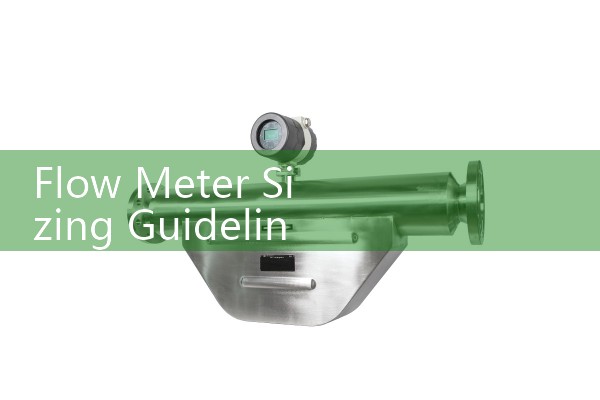
Coriolis mass flow meters: Best for chemical dosing, fuel oil, palm oil and liquid food. A 0.2 percent accuracy on a DN25 Coriolis meter is typical. For a flow range of 50 to 500 kg/h, a DN15 or DN25 sensor is often enough.
Oval gear flow meters: Good for diesel, lube oil and viscous fluids from 1 cP to 1000 cP. Size by flow range in L/h. A diesel generator fuel line at 0 to 200 L/h often uses a 6 mm or 10 mm oval gear flow meter, not a DN25 unit.
Thermal mass flow meters: Use for air, biogas and natural gas. Check the minimum and maximum velocity. Over-sizing a thermal meter for a 1 inch pipe when actual flow is 0.5 m/s can produce zero drift.
Pressure Drop and Cost Are Also Over-Sizing Problems
An oversized meter does not only lose low end signal. It can also add avoidable pressure drop in viscous liquids. On a 2 inch fuel oil transfer line, a DN80 Coriolis meter may create more pressure drop than a DN25 oval gear meter. This matters for terminal operators and ship fuel systems. It also costs more.
DN15 and DN25 meters cost less than DN80 and DN100 meters. Flanges, gaskets, spare parts and installation all scale with size. Over-sizing wastes budget on a sensor that may never see its upper range.
How We Check Sizing at Silver Automation Instruments
Our application team checks velocity, Reynolds number, conductivity, pressure drop and signal level before quoting. We ask for the minimum flow, not just the maximum. Many suppliers skip this step. That is why a customer in Vietnam received an oversized vortex meter from another vendor last year. The line ran at 15 percent of the meter range. The meter read zero for half the production day.
Send us your pressure in bar, temperature in °C, pipe size in DN, and flow range in kg/h or m3/h. We will recommend one model and one line size. For water and wastewater, we may suggest an electromagnetic flow meter. For diesel and lube oil, an oval gear flow meter. For steam, a vortex flow meter. For chemical mass balance, a Coriolis mass flow meter.
Contact Silver Automation Instruments at Tel: +86-25-68650347, Whatsapp: +86-25-52155837, WeChat: +86 15365082610. You can also send your process data through our website flow-meter.com.au.
FAQ
Why should I not match the flow meter size to the pipe size?
Pipe size is often based on future capacity or low pressure drop. The actual flow may be far below the pipe full velocity. A flow meter must match the real minimum and maximum flow range, not the pipe DN.
What is the minimum velocity for an electromagnetic flow meter?
Many electromagnetic flow meters need at least 0.1 m/s for a reading. For stable accuracy and noise rejection, keep normal velocity between 0.5 m/s and 3 m/s. For sludge or slurry, use a higher velocity to reduce coating effects.
Which flow meter is best for low flow after line size reduction?
For liquid chemicals or oil, a Coriolis mass flow meter or oval gear flow meter works well at low flow. For conductive water, a smaller DN electromagnetic flow meter is suitable. For gas, a thermal mass flow meter may handle low velocities better than a vortex meter.
Can a vortex flow meter read very low steam flow?
Usually no. Below the minimum Reynolds number, the bluff body will not create a stable frequency. The transmitter may show zero or hold the last value. For low steam flow, check the vendor startup flow at your specific pressure and temperature.
What data should I send for a flow meter sizing check?
Send minimum, normal and maximum flow rate. Include fluid name, viscosity, pressure, temperature and pipe DN. For gas, include reference density or operating density. For liquid, include conductivity for electromagnetic meters.
 Hot News
 Related AD