

『High Pressure Air Flow Meter Systems: Sizing Heavy-Duty Gas Monitors for Scuba and Industrial Compressor Skids』Related information(flow rotameter|digital flow meter|balo meter|hydraulic flow meter|volumetric meter|positive displacement meter|pitot tube flow meter|displacement meter|cfm meter|variable area flow meter|inline flow meter|differential pressure flow meter|calibrated flow meter|velocity meter|paddle wheel flow meter|oval gear flow meter|anemometer hvac|multiphase flow meter|doppler flow meter|thorpe tube flowmeter|heat flow meter)
High Pressure Air Flow Meter Systems: Sizing Heavy-Duty Gas Monitors for Scuba and Industrial Compressor Skids
Quick Answer: For scuba and industrial compressor skid air flow measurement, size the flow meter by mass flow, operating pressure, and gas temperature, not by pipe diameter alone. Use a thermal mass flow meter rated above the compressor discharge pressure. Send your pressure in bar, temperature in °C, pipe size DN, and flow range to Silver Automation Instruments for a direct model match.
Why Sizing High Pressure Air Flow Meters Is Different
Selecting a high pressure air flow meter for a scuba or industrial compressor skid comes down to actual operating data. High pressure air is not the same fluid as low pressure air. At 40 bar, gas density is much higher than at 7 bar. A meter sized only for line size will read wrong. In practice, compressor skid builders see this when flow readings drift after startup. The flow meter must be selected for actual operating pressure and actual gas temperature.
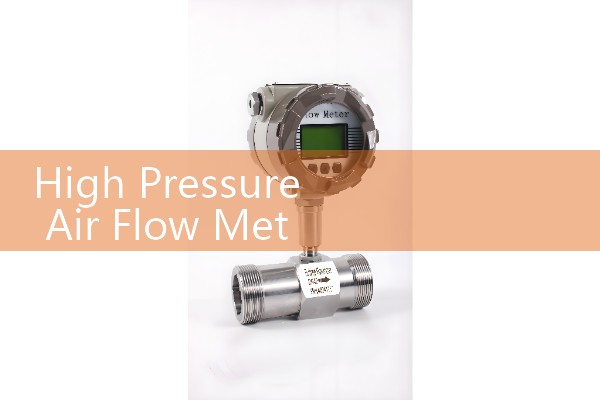
Thermal mass flow meters are the usual choice for this task. They measure gas mass flow directly. A single 4-20 mA HART output goes to the PLC. There is no need for separate pressure and temperature compensation. That saves panel space and wiring time on a tight compressor skid.
Start With Operating Data Not Pipe Diameter
Most engineers skip this part. They see a DN25 pipe and select a DN25 meter. That approach fails at high pressure because the same mass flow occupies less actual volume. A compact flow body can often handle the job. But the body and sensor must still survive the pressure rating.
Field data includes gas type, pressure in bar, temperature in °C, flow range in kg/h or Nm3/h, pipe size DN, and process connection type. Also note the output signal and hazardous area certification. A clear data set prevents a meter that is physically too large or electronically limited.
Scuba Compressor Skid Air Flow Monitoring
Scuba compressor skids often run final pressures of 200 bar, 250 bar, or 300 bar. Flow measurement is usually taken at the low pressure intake or after the first stage. Some stations also monitor booster output for total air volume filled. Here is the thing. The flow meter body, fittings, and sensor must be rated for the highest pressure they can see during a locked flow or bypass condition.
A 40 bar inline thermal mass flow meter is common for intake and intermediate stages. High pressure versions with 316L wetted parts can be supplied for 100 bar or 350 bar ratings. For scuba filling stations in Southeast Asia and the Middle East, Silver Instruments supplies compact inline thermal mass flow meters for air bank monitoring. The key output is total air volume for cylinder filling records.
Industrial Compressor Skid Air Flow Monitoring
Industrial compressor skids include oil flooded screw machines, oil free screw machines, reciprocating boosters, and instrument air packages. Discharge pressures commonly sit at 7 bar, 10 bar, 16 bar, or 40 bar. Heavy duty gas monitors on compressor skids need a flow sensor that tolerates vibration, pressure spikes, and wet air. A thermal mass flow sensor with a 316L probe and a rugged sensor coating works well. Some sites in Vietnam and Mexico run compressor packages outdoors with high humidity. The electronics enclosure should be IP65 or IP67.
Silver Instruments suppl
Sizing Formula and Pressure Correction
A thermal mass flow meter reads gas mass velocity directly. The output can be scaled in Nm3/h or kg/h. That point matters because actual volumetric flow shrinks at high pressure. For example, a compressor delivering 300 Nm3/h at 10 bar has an actual volumetric flow of about 28 m3/h. The meter size should be based on mass flow and actual velocity. A standard thermal mass flow meter handles 0.5 to 60 Nm/s for compressed air. Keep the sensor within this range for stable readings.
Recommended Silver Instruments Model
A standard model for compressor skids is the SIL-TMF inline thermal mass flow meter. It comes in DN15, DN20, DN25, DN40, DN50, DN80, and DN100. The wetted material is 316L stainless steel. The sensor uses a PT100 temperature reference for thermal mass measurement. The electronics provide 4-20 mA HART with optional RS485 Modbus. Pressure ratings go from 16 bar to 40 bar standard, with 100 bar and 350 bar options for scuba or high pressure air systems.
Pair the SIL-TMF inline meter with a PLC or a flow totalizer. For skids with wet air after the compressor, request the rugged sensor coating to reduce drift.
Where to Install the Flow Meter on a Compressor Skid
Install the meter after the aftercooler and moisture separator. Place the sensor in a straight run. A minimum of 15 DN upstream and 5 DN downstream is standard for compressed air. For small skids with short pipe runs, use a flow conditioner. Mount the electronics away from compressor discharge pulsation. Use flexible conduit for wiring. Avoid installing right after a valve. Vibration is common on compressor skids, so an all welded meter body is a good choice.
Data to Send for a Quote
Send us the pressure in bar, temperature in °C, pipe size DN, flow range in kg/h or Nm3/h, and gas type. Also tell us the output you need: 4-20 mA, HART, Modbus, or pulse. Contact Silver Instruments by Tel +86-25-68650347, WhatsApp +86-25-52155837, or WeChat +86 15365082610.
FAQ: High Pressure Air Flow Meter Sizing
Can a thermal mass flow meter handle 300 bar scuba air? Yes if selected with a high pressure body and correct process connection. Most scuba skids measure at intake or interstage pressure. Give us the exact pressure before final selection.
What flow range is typical for industrial compressor skids? It depends on compressor size. Small packages often run 50 to 500 Nm3/h. Larger units can go 2000 Nm3/h or more. Use mass flow not volumetric flow for sizing.
Do I need pressure and temperature compensation for air flow? No. Thermal mass flow meters read mass flow directly. That removes the compensation loop and simplifies skid wiring.
Which output signal works best for a compressor skid PLC? 4-20 mA HART is common because it carries flow, total, and diagnostics on one loop. Modbus RTU is useful when many skids share one control panel.
Is inline or insertion better for high pressure compressed air? Inline is better for DN15 to DN50 lines. Insertion works for larger pipes, but high pressure probes can vibrate. For compressor skids, we usually recommend inline thermal mass flow meters.
 Hot News
 Related AD