

『Insertion Flow Meter Installation Guide for Large Diameter Pipelines』Related information(flow rotameter|digital flow meter|balo meter|hydraulic flow meter|volumetric meter|positive displacement meter|pitot tube flow meter|displacement meter|cfm meter|variable area flow meter|inline flow meter|differential pressure flow meter|calibrated flow meter|velocity meter|paddle wheel flow meter|oval gear flow meter|anemometer hvac|multiphase flow meter|doppler flow meter|thorpe tube flowmeter|heat flow meter)

Insertion Flow Meter Installation Guide for Large Diameter Pipelines
Quick Answer
Insertion flow meters cut installation cost on pipes DN300 to DN3000. They need correct insertion depth, enough straight pipe, and a good seal. Most failures happen because the sensor tip sits in dead flow zones or the meter is wired as if it is a full-bore device. This guide gives field-tested steps from Silver Automation Instruments that engineers in water, oil and gas, and chemical plants use every day.
Why You Choose Insertion Over Full-Bore on Large Lines
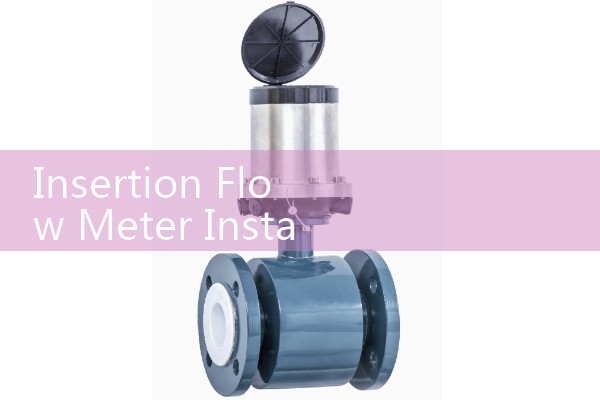
Full-bore magmeters or turbine meters above DN600 get heavy, expensive, and hard to shut down. Insertion meters weigh under 30 kg and install through a single ball valve. A water plant in Malaysia replaced two DN1000 spool meters with SIL-E insertion electromagnetic flow meters. They dropped installation cost by 65% and kept the line running during hot-tap. That is real savings.
Pre-Installation Checks: Fluid, Pipe, and Location
Gather fluid conductivity if you use electromagnetic type. Silver Instruments SIL-E Insertion Magmeter needs at least 5 µS/cm. For gas, thermal insertion meters like the SIL-TF need dry, clean gas. For steam, a vortex insertion probe is a better match. Measure the exact inner diameter, not just nominal size. A DN800 steel pipe often has a real ID of 792 mm. This number drives depth calculation.
Check the pipe material. Magnetic flow meters require a non-magnetic pipe or a spool piece if the pipe is steel. If the pipe is carbon steel, our hot-tap assembly includes an isolation kit. In practice, many projects in Southeast Asia use carbon steel pipes with cathodic protection. Double-check grounding rings.
Hot-Tap vs. Shutdown Installation
Hot-tapping lets you install the meter while fluid flows. We supply a 2-inch full-port ball valve and a retractor tool. Drill through the valve, retract the drill, close the valve, then insert the probe. This method is common in district cooling plants in the Middle East and oil pipelines in Nigeria where you cannot stop flow.
Shutdown installation is simpler but needs line empty and clean. Weld a weld-o-let or thread-o-let, mount the valve, and insert the meter. No special hot-tap machine. We see this often in new builds or during plant turnaround.
Insertion Depth: The Number That Decides Accuracy
Insertion depth puts the sensor tip at the point of average velocity. For turbulent profiles, that point is at 0.12D from the pipe wall or roughly 1/8 of the diameter. But in disturbed flow, you may need to measure at 1/8 of the ID from the centerline. Our manual for SIL-E Insertion Magmeter gives a formula: Depth = (Pipe ID / 8) + Wall thickness + Fitting height. Send us your pipe schedule and we will calculate it for you.
Wrong depth leads to 5-15% under-read or over-read. A lube oil blending plant in Thailand once inserted the probe 30 mm short. They saw a 12% error until we helped them re-set the depth. That 30-minute fix saved them from wasting thousands of liters of base oil.
Straight Pipe Runs and Flow Profile
Insertion meters need less straight run than full-bore meters but still demand it. For the SIL-E electromagnetic type, 10 pipe diameters upstream and 5 diameters downstream are enough if there is no pump or valve within that distance. For thermal insertion meters on compressed air, we advise 15D upstream
If you must deal with a short straight run, use a flow straightener or a multi-point insertion probe. Silver Instruments offers a multi-point thermal probe that averages velocity across four points. That helps when straight run is only 4D. A gas bottling factory in Peru used that setup and got readings within 2% of a master meter.
Electrical Wiring and Signal Grounding
This part trips many contractors. Insertion meters output 4-20 mA, pulse, or RS485 Modbus. Always run signal wires separate from power cables. Use shielded twisted-pair cable. Ground the shield at the transmitter end only. For electromagnetic insertion types, add grounding rings or grounding electrodes if the pipe is lined or non-conductive.
In wet environments, like a water treatment plant in Indonesia, we saw signal drift caused by moisture in the junction box. Seal the cable gland with PTFE tape and fill the box with desiccant sachets. Simple, and it stops 90% of field calls.
Commissioning and Field Verification
After insertion, do a zero check with pipe full, no flow. Set the cut-off low-flow value to around 0.1 m/s. Then run a spot check with a portable ultrasonic clamp-on meter if available. Many customers just verify the analog output with a multimeter: 4 mA at zero flow, 20 mA at full scale. If you need a certificate, our engineers support on-site flow calibration in Southeast Asia and the Middle East.
Five Most Critical Installation Questions
1. Can I install an insertion meter in a vertical pipe? Yes, flow must go upward to keep air out. The insertion point is on the side, not top or bottom, to avoid air bubbles and sediment. We have seen air pockets ruin readings in vertical down-flow installations.
2. What is the minimum pipe diameter for insertion? Typically DN300 for electromagnetic and thermal types. Below DN300, full-bore meters are more accurate and cost-effective. Silver Instruments full-bore magmeters start at DN15.
3. Do I need a special valve for hot-tap? A standard full-port ball valve with a 2-inch NPT thread works for most SIL-E probes up to 40 bar. Above that, we supply a high-pressure ball valve and packing gland. Provide your expected pressure when you ask for a quote.
4. How often should I recalibrate an insertion flow meter? Once a year for custody transfer, every two years for process control. Thermal dispersion probes may need cleaning if the gas is dirty. Just pull the probe through the valve, clean the sensor tip, and reinsert. No line shutdown required.
5. Which insertion meter handles solids in water? The SIL-E Insertion Electromagnetic Meter works with up to 3% suspended solids. For raw sewage, we recommend a full-bore no-moving-parts magmeter. Tell us your solids content and particle size, and we will advise.
Ready to specify your insertion meter? Send us your pressure (bar), temperature (°C), pipe size (DN), and flow range. Email: [email protected], Tel: +86-135-1213-1526, WhatsApp: 86-135-12131526, WeChat: +86 13512131526. Silver Automation Instruments supplies insertion flow meters to over 40 countries, including Malaysia, Vietnam, Saudi Arabia, Nigeria, and Peru. Our team answers technical questions within 24 hours.
 Hot Product
 Related AD