

『PFA Flow Meter: High-Purity Corrosive Chemical Processing Sensors』Related information(flow rotameter|digital flow meter|balo meter|hydraulic flow meter|volumetric meter|positive displacement meter|pitot tube flow meter|displacement meter|cfm meter|variable area flow meter|inline flow meter|differential pressure flow meter|calibrated flow meter|velocity meter|paddle wheel flow meter|oval gear flow meter|anemometer hvac|multiphase flow meter|doppler flow meter|thorpe tube flowmeter|heat flow meter)
PFA Flow Meter: High-Purity Corrosive Chemical Processing Sensors
Quick Answer: A PFA flow meter uses perfluoroalkoxy lining on the wetted parts to handle aggressive acids, bases, and solvents without metal contamination. It works well for ultra-pure water, HCl, H₂SO₄, and HF dosing at temperatures up to 180 °C. Most semiconductor fabs and chemical plants pick these meters because a single pinhole in stainless steel can ruin a whole batch.
Silver Automation Instruments makes PFA-lined electromagnetic flow meters for exactly these jobs. We ship to fabs in Malaysia, chlor-alkali plants in India, and specialty chemical exporters in Mexico. The sensor bore is fully smooth PFA with no crevices. That means no particle traps. No biofilm buildup. No corrosion under a flange gasket.
Why Engineers Choose PFA Over PTFE or Rubber Liners
PTFE liners are common but they can cold-flow under flange pressure. PFA does not deform that way. It is melt-processable and denser. In practice, a DN25 PFA-lined meter from Silver Instruments holds its shape after 100 thermal cycles between 20 °C and 160 °C. We have tested this in our Nanjing flow lab.
Rubber and hard rubber liners swell in solvents like toluene or MEK. PFA barely reacts. A customer in Thailand replaced four rubber-lined mag meters on a TMAH chemical blending skid within 18 months. They switched to our PFA meters three years ago. Zero liner swelling since then. Zero unplanned downtime.
What Goes Into a PFA Flow Meter Sensor
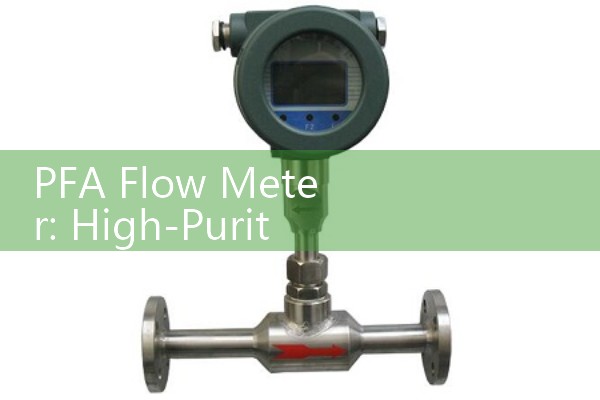
The sensor body is carbon steel or 304 stainless steel with a thick PFA liner injected directly into the pipe spool. Electrodes are Hastelloy C-276 or tantalum. The grounding ring is usually tantalum or platinum-clad to avoid galvanic corrosion.
Typical specs for Silver Instruments PFA mag meters:
Line sizes: DN15, DN25, DN40, DN50, DN80, DN100, DN150. Larger on request.
Process temperature: -20 °C to +180 °C (PFA only, not the converter).
Pressure rating: PN16 or PN40 with proper flange backing.
Conductivity: down to 5 µS/cm. Works with most chemicals except pure hydrocarbons.
Output: 4-20 mA HART, pulse, RS485 Modbus.
Certifications: ATEX Zone 1 / IECEx for solvent- and acid-handling areas.
Where PFA Flow Meters Outperform Other Types
In photoresist and stripper delivery loops, a Coriolis meter brings metal tubes even if Hastelloy. PFA mag meters keep the fluid path fully plastic. For hydrofluoric acid (HF) at 12% concentration, our PFA meter with tantalum electrodes handles the service easily. An electromagnetic meter with PTFE liner and stainless electrodes failed in the same Indonesian plant after four weeks.
One note for buyers: PFA mag meters need a short straight pipe run of 5D upstream and 3D downstream. That is standard for mag meters. No special requirement. Most engineers skip the downstream requirement. Do not skip it if you have a partially open butterfly valve right after the meter.
An Actual Installation in a Middle East Chemical Terminal
Last year a terminal operator in Jebel Ali called us. They move 98% sulfuric acid from ship to storage. Their old turbine meters with Hastelloy internals jammed from iron sulfate scale. We supplied three DN100 PFA-lined mag meters with tantalum electrodes and PTFE-coated flanges. The converter we used was the Silver SmartMag 800 series, remote-moun
Commissioning took one afternoon. The operator sent us a photo of the display showing 126.8 m³/h at 31 °C. That was their first batch after switchover. They have since ordered five more meters for different jetty arms.
Typical Industries and Fluids
Semiconductor: UPW, CMP slurry, NH₄OH, BOE (buffered oxide etch).
Pharma API: methanol, acetonitrile, glacial acetic acid.
Chlor-alkali: NaCl brine, NaOH 50%, wet chlorine condensate (requires Hastelloy C electrodes).
Metal finishing: nitric acid, chromic acid, bright nickel plating solution.
Each fluid calls for specific electrode and grounding material. If you are not sure, send us the chemical name, concentration, and temperature. We will check compatibility against our materials database. No guesswork.
Installation and Maintenance Tips
Do not lift the meter by the converter housing. Use the lifting lugs on the flange. Keep the flange gasket ID larger than the liner ID. A gasket protruding into the flow stream will cause a swirl and offset the reading by up to 3%.
For CIP (clean-in-place) cycles at 85 °C sodium hydroxide, the PFA liner handles it with no steam-out step. After three years, we advise a visual inspection of the liner near the electrodes. If you see hairline cracks, plan a replacement during the next turnaround. We stock liners and complete sensors for fast swap-out.
How to Get a Quote
We need six numbers from you: fluid name and concentration, operating temperature, operating pressure, pipe size (DN), flow range min and max, and output preference (4-20 mA HART or Modbus). That is it. Once we have those, our application engineer picks the electrode material, grounding ring, and liner thickness. You get a formal quotation within one working day.
Contact Silver Automation Instruments directly.
Email: [email protected]
Tel: +86-135-1213-1526
Whatsapp: 86-135-12131526
WeChat: +86 13512131526
FAQ
Can a PFA flow meter measure acids with low conductivity?
PFA meters need a minimum fluid conductivity of 5 µS/cm. That covers most mineral acids even at high purity. For ultrapure water with conductivity below 1 µS/cm, we recommend a different approach. Tell us the exact µS value and we will check.
What is the maximum temperature for a PFA-lined mag meter?
+180 °C for the sensor. The remote converter must be installed away from the heat. Keep the sensor housing ambient below 60 °C.
Do PFA meters work for slurries like CMP?
Yes, with care. CMP slurry has silica particles at 5–30% solids. The PFA liner resists abrasion better than PTFE. Use electrodes with a recessed design to avoid scratching.
How often should I recalibrate a PFA flow meter?
Silver Instruments recommends every 24 months for chemical metering. Some semiconductor fabs do it every 12 months to match ISO 17025. We offer calibration certificates traceable to CNAS.
What makes Silver Instruments PFA meters different from others?
We injection-mold the PFA liner under vacuum to eliminate air bubbles. Each sensor undergoes a 40 kV spark test on the liner and a wet calibration on a NIST-traceable rig. We ship from our Nanjing factory to over 60 countries, offering quick support in English, Spanish, and Arabic.
 Hot Product
 Related AD