

『Gas Flow Meter Repair: Troubleshooting and Field Calibration For Vapor Loops』Related information(flow rotameter|digital flow meter|balo meter|hydraulic flow meter|volumetric meter|positive displacement meter|pitot tube flow meter|displacement meter|cfm meter|variable area flow meter|inline flow meter|differential pressure flow meter|calibrated flow meter|velocity meter|paddle wheel flow meter|oval gear flow meter|anemometer hvac|multiphase flow meter|doppler flow meter|thorpe tube flowmeter|heat flow meter)
Gas Flow Meter Repair: Troubleshooting and Field Calibration for Vapor Loops
Quick Answer: Most vapor loop gas flow meter problems come from condensation, sensor drift, incorrect density compensation, or a failed 4-20 mA loop. Check the process pressure and temperature inputs before you change any calibration factor. If the meter is stable but the totalized flow is off by more than 1 percent of rate, run a field calibration or plan a bench repair.
Common Failure Modes in Vapor Loop Gas Flow Meters
We have seen many field failures on steam and gas lines in Southeast Asia and the Middle East. In practice, condensation is the most common root cause for vortex flow meters on saturated steam. A customer in Indonesia ran a DN100 line at 7 bar steam. The flow reading jumped 14 percent during start-up because the drain point was too close to the meter. The fix was to install a steam trap upstream.
Sensor drift is another issue. A thermal mass flow meter on a compressed air line can drift by 2 to 3 percent per year if the gas contains oil mist or moisture. An electronics fault often shows as a fixed 4 mA or 20 mA output with no process change.
A PT100 in a DN80 steam line can shift by 0.5 °C after thermal cycling. That error changes density compensation and produces a mass flow error near 0.6 percent on saturated steam at 8 bar.
Field Troubleshooting Sequence
Start with a visual check. Look for water in the conduit, a loose cable gland, a cracked display, or overheating on the terminal board. Many faults come from power supply wiring, a bad earth, or a loop powered device below minimum voltage.
Check the 4-20 mA signal first. Disconnect the loop and measure the current with a multimeter. If the output is fixed at 4 mA or 20 mA and does not react to flow, read the HART diagnostic status. Most Silver Instruments vortex flow meters report a sensor error or a compensation error over HART. Do not replace the meter before reading this status.
Compare process values for vapor loops. A 0.3 bar error on a pressure transmitter will cause a mass flow error on a compensated gas meter. Verify the PT100 wiring. If the temperature input is open, the meter may hold the last value or switch to a fixed reference.
Field Calibration for Vapor Loops
Field calibration does not always mean a full wet calibration. In many cases you perform a zero check and a span check against a reference value. Close the isolation valves and allow the meter body to reach zero flow. For a vortex meter, run the zero trim from the local display or HART master.
For a gas thermal mass flow meter, use a calibrated reference or a known flow source. If the gas is nitrogen, the meter must be set to nitrogen properties. Never assume air calibration is correct for methane or hydrogen.
On steam loops, check the density compensation. Use actual pressure and PT100 values, not design values. A saturated steam line at 10 bar and 184 °C shows a different mass flow than a superheated steam line at 10 bar and 220 °C. A 5 °C error changes mass flow by about 0.5 to 0.7 percent.
Do not adjust the calibration factor just because the reading looks wrong. A customer in Mexico changed the K-factor on a DN80 vortex meter by 8 percent because a pressure impulse line was blocked. After cleaning the line, the original K-factor was correct.
Repair Scope and Spare Parts
A display board, a terminal board, or a 4-20 mA output board can be replaced in the field if the meter is not under flameproof certification constraints. In an ATEX Zone 1 area, the enclosure must not be opened while energized. Use an Ex-certified technician.
Sensor cleaning is common for vortex flow meters in dirty steam. Scale, rust, or boiler carryover can co
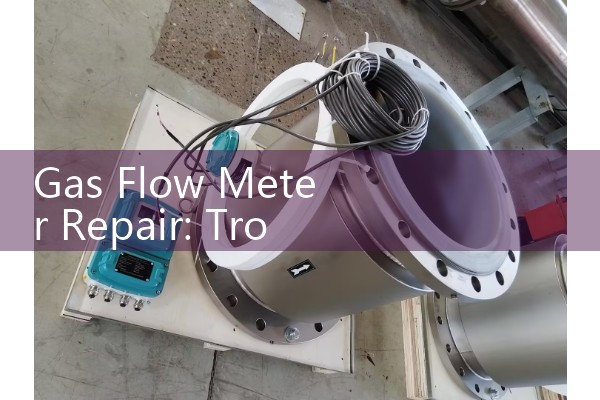
If the meter has a damaged sensor or a failed converter, bench repair is usually faster. Send the meter to Silver Automation Instruments. We will inspect the sensor, replace the O-rings, test the output, and return a repair report. Typical bench repair time is 3 to 5 working days from arrival.
When to Replace Instead of Repair
If the meter is more than 10 years old and the converter board is obsolete, replacement is often cheaper than repair. A new Silver Instruments vortex flow meter with integrated temperature and pressure compensation can solve repeatability issues and reduce maintenance.
In corrosive or high temperature service, check the wetted material. A 316L body is standard for many gas and steam lines. A vortex meter with Hastelloy C wetted parts may be required for wet chlorine or acid vapor. Repairing a body made of the wrong material does not fix the root cause.
Recommended Silver Instruments Models for Vapor Loops
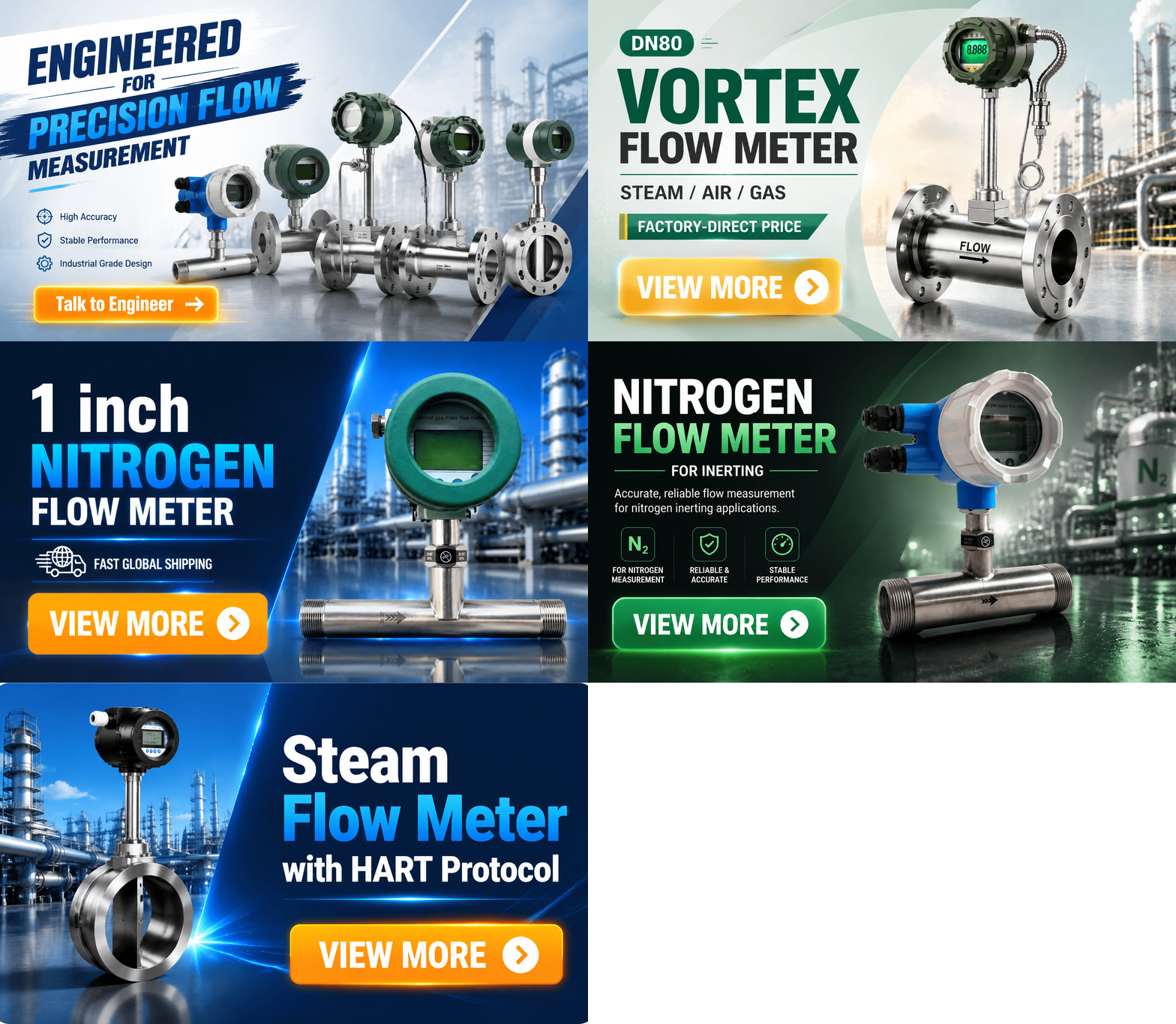
Silver Instruments supplies inline vortex flow meters for steam, air, and industrial gases from DN15 to DN300. The meter has a 316L body, a local display, and a 4-20 mA HART output. Optionally it accepts a PT100 temperature input and a pressure transmitter signal for mass flow compensation. Accuracy for gas and steam is 1.0 percent of reading. Repeatability is 0.5 percent of reading.
For compressed air and low pressure gas, Silver Instruments thermal mass flow meters cover pipe sizes from DN15 to DN100. They report Nm3/h or kg/h directly and do not require external pressure or temperature transmitters.
For high pressure natural gas or process gas, a Coriolis mass flow meter from Silver Instruments can measure mass flow directly. A DN25 Coriolis meter handles 0 to 3000 kg/h and is unaffected by flow profile.
FAQ
Why does my vortex steam flow meter read high during startup?
Condensation or wet steam below 95 percent quality is the usual cause. Water droplets hit the bluff body. Install a steam trap before the meter and use a straight run of at least 15 DN upstream and 5 DN downstream.
Can I calibrate a gas flow meter without removing it from the line?
Sometimes. You can run a zero verification, check the 4-20 mA loop, and compare HART process values. A full traceable calibration usually requires a flow bench or a master reference meter.
How often should a vapor loop flow meter be calibrated?
Every 12 months is common for non-critical process gas. For custody transfer or safety applications, calibrate every 6 months. Meters in wet or dirty steam may need sensor cleaning every 6 months.
What is the difference between a vortex meter and a thermal mass meter in gas service?
A vortex meter measures velocity and handles saturated steam. A thermal mass meter measures mass flow directly and works well on clean, dry air or nitrogen. For wet or dirty gas, a vortex meter is easier to clean.
What information do you need to recommend a repair or replacement?
Send us the gas type, pressure in bar, temperature in °C, pipe size in DN, flow range in kg/h or Nm3/h, output signal, and any hazardous area certification.
Contact Silver Automation Instruments: Send us your gas type, pressure in bar, temperature in °C, pipe size in DN, and flow range in kg/h or Nm3/h. We will help you choose between field repair, bench repair, or replacement. Tel: +86-135-1213-1526. Whatsapp: 86-135-12131526. WeChat: +86 13512131526.
 Hot Product
 Related AD