

『Non Intrusive Ultrasonic Flow Meter: Transit-Time Pipe Testing Kits』Related information(flow rotameter|digital flow meter|balo meter|hydraulic flow meter|volumetric meter|positive displacement meter|pitot tube flow meter|displacement meter|cfm meter|variable area flow meter|inline flow meter|differential pressure flow meter|calibrated flow meter|velocity meter|paddle wheel flow meter|oval gear flow meter|anemometer hvac|multiphase flow meter|doppler flow meter|thorpe tube flowmeter|heat flow meter)
Non Intrusive Ultrasonic Flow Meter: Transit-Time Pipe Testing Kits
Quick Answer
Non intrusive ultrasonic flow meters based on transit time difference clamp onto the outside of a pipe and measure flow without cutting the line or stopping production. These pipe testing kits are used for temporary flow surveys, energy audits, leak detection, and checking the accuracy of existing inline meters. Silver Instruments supplies portable and fixed clamp-on kits for pipe diameters from DN15 up to DN6000, working with clean liquids that contain less than 3% suspended solids.
How Transit-Time Clamp-On Meters Work
Two ultrasonic transducers are strapped to the pipe surface, one upstream and one downstream. Each transducer sends and receives high frequency sound pulses through the liquid. In a flowing liquid, the downstream pulse travels faster, the upstream pulse travels slower. The flow meter calculates the time difference and converts it into flow velocity. Multiply velocity by the pipe cross sectional area and you get volumetric flow rate. Accuracy on a well prepared pipe can reach 0.5% of reading with repeatability of 0.2%. This is proven on carbon steel, stainless steel, PVC, and even lined pipes when the lining is acoustically conductive.
Three Specific Advantages Over Inline Flow Meters
You do not need to shut down the process for installation. A water distribution plant in Indonesia used one Silver Instruments kit to verify 12 magnetic flow meters across their site in two days without a single pipe weld. No pressure drop, no moving parts, and zero risk of fugitive emissions because the pipe wall stays intact. The same kit can move between locations with different pipe sizes in minutes. Most engineers skip this part but recalibrating a portable clamp-on meter takes longer than mounting the transducers on a new pipe if you keep coupling pads and mounting straps ready.
Industries Where These Testing Kits Earn Their Keep
We have seen this on customer sites many times. A paint manufacturer in Vietnam used a portable SUT-2000H kit to balance flow between mixing vessels and reduce solvent waste by 8%. A Middle East desalination plant ordered three permanent clamp-on systems to monitor brine recirculation loops because the high salinity made inline sensors corrode after six months. Semiconductor fabs rely on these kits to verify ultrapure water flow without risking contamination. Food and beverage plants often test CIP return lines during sanitation cycles. In practice, any industry moving water, chemicals, light oils, glycol, or refrigerants in a full pipe can use a transit-time testing kit.
How to Select the Right Kit
Start with the pipe outside diameter and wall material. Standard transducers cover DN15 to DN200 on metal and plastic pipes. Larger pipe kits are available up to DN6000. You need to know the liquid type, temperature range, and whether the fluid contains any gas bu
Installation Without Process Shutdown – What You Need to Know
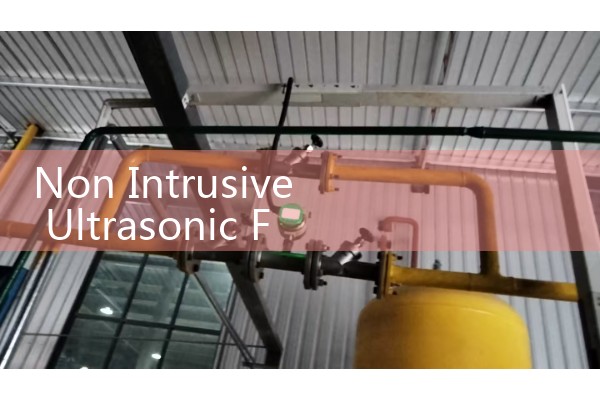
The pipe surface must be clean and free of loose paint. A thin layer of acoustic coupling gel fills microscopic air gaps between the transducer face and the pipe. Transducers are mounted using the V method on small pipes or the Z method on larger diameters. Heres the thing – straight pipe run requirements still apply. You want at least 10 pipe diameters of straight run upstream and 5 diameters downstream from any elbow, valve, or pump. Measure the pipe circumference with a tape, mark the position exactly. A 2 mm error in transducer spacing can shift the reading by more than 1%. If the pipe has internal scale or rust, the signal may be too weak. Some kits include a built-in oscilloscope function to check signal quality before you trust the data.
FAQ
Can you measure wastewater or slurry with a transit-time kit? No. Transit-time technology needs clean liquids with minimal solids or entrained air. For dirty liquids, a Doppler ultrasonic flow meter is the better choice. Silver Instruments can supply either type.
What is the smallest pipe diameter you can test? Standard transducers work from DN15. Smaller laboratory tubing requires high frequency sensors that we can provide on request.
Can a clamp-on flow meter measure natural gas or steam? Transit-time ultrasonic meters work on liquids. For gas measurement, you need a different gas ultrasonic flow meter design. Steam is not feasible with clamp-on sensors because of the temperature and phase change challenges.
What output signals does the portable kit provide? The SUT-2000H outputs a 4-20 mA analog signal, a pulse output for totalizing, and RS485 Modbus RTU. Data can be stored on a microSD card and transferred via USB.
Will the meter detect reverse flow? Yes. All Silver Instruments transit-time meters automatically detect flow direction and display both positive and negative totals. You can set an alarm relay for undesired reverse flow conditions.
Need a price for a non invasive ultrasonic flow meter kit? Tell us your pipe size, fluid type, temperature, and required output signal. Email: [email protected] | Tel: +86-135-1213-1526 | WhatsApp: 86-135-12131526 | WeChat: +86 13512131526. We ship test kits to Southeast Asia, Australia, the Middle East, Africa, and Latin America from stock in most cases.
 Hot Product
 Related AD