

『Sealing Liquid Flow Meter Monitor: Preventing Packing Fluid Breakdown』Related information(flow rotameter|digital flow meter|balo meter|hydraulic flow meter|volumetric meter|positive displacement meter|pitot tube flow meter|displacement meter|cfm meter|variable area flow meter|inline flow meter|differential pressure flow meter|calibrated flow meter|velocity meter|paddle wheel flow meter|oval gear flow meter|anemometer hvac|multiphase flow meter|doppler flow meter|thorpe tube flowmeter|heat flow meter)
Sealing Liquid Flow Meter Monitor: Preventing Packing Fluid Breakdown
Quick Answer: A sealing liquid flow meter monitor continuously tracks the flush or barrier fluid sent to a mechanical seal or packing gland. This prevents packing fluid breakdown caused by low flow, high temperature, or fluid contamination. Silver Instruments recommends inline Coriolis mass flow meters or full-bore electromagnetic flow meters with a 4-20 mA HART output and a local display. They give you an early warning before a dry-run condition damages the seal faces and forces an unplanned shutdown.
Why Packing Fluid Breakdown Happens Faster Than Most Maintenance Teams Expect
Packing fluid breaks down when the flow rate drops below the minimum required flush volume. Engineers often set a manual needle valve once during commissioning and then forget it. Over months, filter clogging, line scaling, or a slight drop in supply pressure cuts the actual flow by half. The fluid stagnates inside the seal chamber, overheats, and oxidizes. Within hours, the lubricating film between the seal faces disappears. The carbon face cracks. The product leaks to the atmosphere. We have seen a palm oil refinery in Indonesia lose a mechanical seal every 60 days because nobody checked the actual barrier oil flow after the first week.
Temperature is the second killer. Barrier fluids like Isopar or Mobiltherm 600 start degrading fast once the seal chamber sump temperature crosses 180 °C. The fluid cokes. Solid particles form and lap the seal faces. A flow meter monitor with a local PT100 input catches this thermal runaway. You get a flow reading in kg/h or L/h plus a temperature reading on the same transmitter. That two-in-one data point is what allows a plant engineer to distinguish between a blocked filter and a cooked fluid batch.
Which Flow Meter Works Best for Barrier and Buffer Fluid Monitoring
Customers often ask whether an oval gear meter, a thermal mass meter, or a Coriolis meter suits the job. Here is the thing. Packing fluid applications are low-flow. DN6, DN10, DN15 pipe sizes are common. Flow ranges sit between 0.5 and 30 L/h for small-bore single cartridge seals and can go up to 120 L/h for large split-case pump packing glands. You need a meter that can detect 0.2 L/h changes, not just totalised volume over a day.
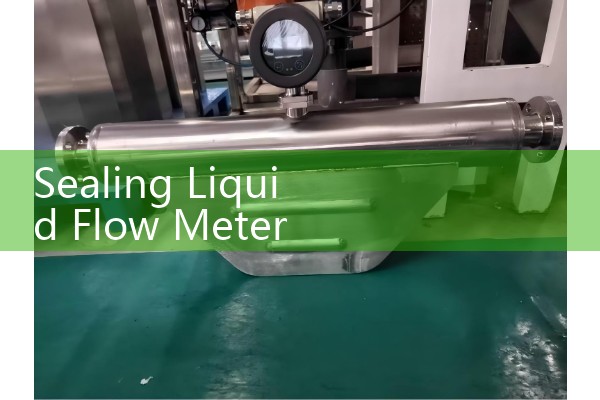
A Coriolis mass flow meter from Silver Instruments works best when the barrier fluid is a synthetic oil, diesel-based flush, or anything with a viscosity above 5 cP. The meter measures mass flow directly. It ignores entrained air bubbles that would fool an oval gear or turbine meter. The DN6 Coriolis sensor we supply to a paint manufacturer in Malaysia reads 0 to 50 kg/h with accuracy within ±0.2%. The transmitter triggers a low-flow alarm relay when the rate falls below 3 kg/h. That shutdown signal goes straight to the pump starter panel. No PLC logic delay.
For water-based or glycol-based packing flush fluids, an electromagnetic flow meter is often the better pick. A DN10 electromagnetic flowmeter with PTFE liner and 316L electrodes handles water-glycerine mixes at temperatures up to 120 °C. The output is 4-20 mA plus a pulse for totalised volume. One food-grade lubricant blender in South Africa uses this setup on a triple-screw pump that feeds edible oil packing glands. The meter detects a flow dip the moment a suction strainer begins to plug. They clean the strainer before the packing fluid scorches and turns dark.
A bypass rotameter with a micro switch is the minimum option. But we try to steer customers away from it when the fluid is hot and opaque. The glass tube goes amber after six months. Operators cannot see the float. A sealed transmitter with a digital readout and two alarm outputs solves the visibility problem for good.
Specific Parameters That Make an Installation Successful
When a field engineer in Saudi Arabia contacted us last year, he had three demands. The flow meter must survive 60 °C ambient heat inside a steel enclosure with no forced ventilation. The secondary containment has an ATEX Zone 1 gas group IIC rating. The measuring tube must handle barrier oil pressures up to 80 bar at the seal pot. We specified a stainless steel 316L Coriolis meter with a secondary pressure containment rated to 100 bar and an Ex d IIC T6 housing. The transmitter gave him a local LCD readout plus a HART signal. He wired the low-flow alarm output to a DCS board and got the approval from the process safety team in one meeting.
Pressure rating, wetted material compatibility, and the ability to hold zero under high static pressure are what separate a lab toy from an industrial
Common Mistakes in Packing Fluid Flow Monitoring
Most engineers skip the thermal soak test. A meter that reads correctly on a 20 °C calibration bench can drift 1.5% at 55 °C fluid temperature. Always request a factory temperature compensation table or do an on-site verification with a bucket and stopwatch at operating temperature. We have done this on customer sites many times.
Another mistake is installing a flow meter right after a 90-degree elbow. The flow profile distorts and small-bore Coriolis meters with a single bent tube pick up external vibration. Give the meter ten pipe diameters of straight run upstream and five downstream. Or use a dual straight-tube Coriolis sensor that is less sensitive to mounting stress.
Ignoring fluid viscosity changes is a classic trap. A packing oil that is 22 cSt at 40 °C may thicken to 150 cSt during a cold winter morning start-up in a non-heated pump shed in northern China. The meter must be able to handle that viscosity swing without stalling.
How Silver Automation Instruments Configures Your Monitor
We pre-configure the flow meter transmitter with your specific fluid data: density at reference temperature, alarm setpoints, hysteresis, and output scaling. For a recent order from a geothermal brine injection pump packer in Kenya, we set the low flow alarm at 5 L/h, high temperature alarm at 80 °C, and a 4-second damping to filter out pump-induced pulsations. The customer received a turnkey package: meter, mating flanges, a weatherproof junction box, calibration certificate, and a wiring diagram with terminal numbers. They installed it in one morning and left it running for 18 months without touching the zero.
When to Replace a Packing Fluid Monitor Instead of Recalibrating
If you see erratic readings that do not settle even after cleaning and re-zeroing, check the tube coating. Polymerised barrier fluid can build up a sticky layer inside the measuring tube. On a Coriolis meter this adds mass but also changes the tube stiffness, so density and flow readings walk off together. On an electromagnetic meter a coated liner reduces the signal voltage and triggers an empty pipe alarm. In both cases replacing the primary sensor is cheaper than sending it off for a factory clean and recalibration. We keep DN6, DN10, and DN15 sensors in stock in our Nanjing warehouse. Shipment to Southeast Asia takes 3 business days by air.
FAQ
Q: Can I use a simple paddle wheel flow switch instead of a continuous flow meter?
A paddle wheel switch only tells you flow or no flow. It does not show the actual packing fluid rate. When the flow degrades gradually from 10 L/h to 4 L/h the switch can stay gagged while the fluid is already breaking down. A continuous meter shows you the trend and lets you plan maintenance.
Q: Do I need a Coriolis meter with a secondary containment?
If the barrier fluid is flammable or the seal supply pressure exceeds the meter housing burst rating, then secondary containment rated to the maximum allowable working pressure is mandatory. We supply secondary safety housings for pressures up to 250 bar for these applications.
Q: What approvals does a sealing liquid flow meter need for an offshore platform?
ATEX, IECEx, or North American Class I Division 1 certification is standard. Our meters also carry a DNV type-approval for marine use, which many Southeast Asian offshore operators request during the bid stage.
Q: How often should I verify the meter zero?
Check zero every time you change the packing fluid batch or after a plant turnaround. With a stable installation and clean fluid, we see intervals of 6 months keeping a zero drift under 0.05% of full scale.
Q: Which output do you recommend for DCS integration?
4-20 mA with HART is the safest bet. It gives you the primary flow signal plus a digital secondary variable like temperature or density. You do not need an extra temperature transmitter at the seal pot.
Send us your packing fluid type, operating pressure (bar), temperature (°C), pipe size (DN), and required flow range. We will propose a Coriolis or electromagnetic flow meter monitor with the correct wetted materials and Ex rating. Email [email protected], call Tel: +86-135-1213-1526, or message us on Whatsapp: 86-135-12131526 or WeChat: +86 13512131526. Ask for a dimensional drawing and a price quote in AUD, USD, or EUR.
 Hot Product
 Related AD